Founding fathers of scientific thinking - Francesc Eiximenis
Brief history of atheist thought in Europe, XII century c.e.
HistoricalAlternative paradigm of resource management
When we think about social innovation, we basically assume that this means changing one or another parameter of the existing paradigm without creating alternatives to the existing system. Our picture of the world is built on the familiar culture and socio-economic interactions, they seem so natural to us that we can’t imagine how society can function differently.
When it comes to the problems generated by commodity-money relations, it is practically difficult for us to comprehend how it’s even possible to build a developed state without money. We usually imagine primitive settlements, hunter-gatherers and barter exchange. But, history of South America provided an outstanding precedent, the details of which have been revealed to us quite recently.
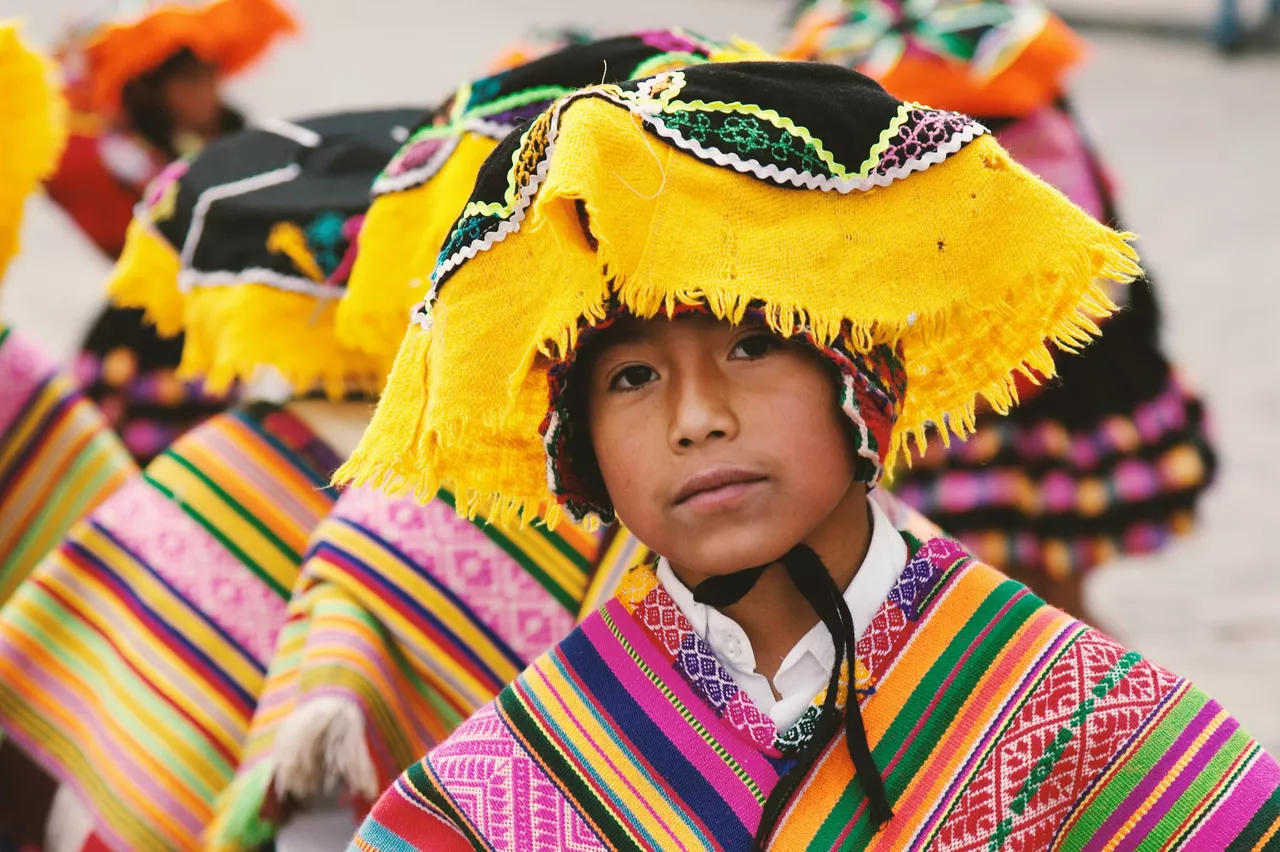
The Inca people built an empire in the harsh conditions of the Andes, based on the principles of reciprocity and merit. Created an economy of universal total employment without the use of money, overcoming hunger, scarcity and labor shortages. The decisions that lead to success in the area of social management and state building of the Inca Empire remain unchallenged 500 years later…
The Inca people came to the Cuzco Valley in the Peruvian Andean highlands around the beginning of the thirteenth century. Over the next three hundred years, the Inca Empire expanded over most of the west coast of South America and became the dominant empire of the region.
An unique feature of the Inca State is that it does not use money and does not conduct internal trade. There are no markets and shops, there are no entrepreneurs, bankers, usurers. The government guarantees each family a plot of land to grow food, two llamas to extract wool and fertilizer. The size of the plot depends on the fertility of the land, the presence of children (for a son, the plot doubled, for a daughter - increased by half). When the territory is divided among all members of the community, the state appropriates the remaining territory.
The Inca economic system operates on the basis of a centralized state. Government creates a system of production quotas, production standards, fines for violation of norms, surplus production conversion into contingency reserves and statistical control. The government acts as a single planning center that is responsible for resource management, production and distribution.
Features of the state structure
The Inca state does not arise in a cultural vacuum - archaeological evidence suggests that the first agricultural settlements of the region appeared about nine thousand years ago. The Inca Empire was the last of the highly developed civilizations of South America. The preceding Wari and Tiwanaku empires are the source of Inca knowledge of administrative and infrastructural management. The Incas actively adapt the working aspects of other cultures to build their state, and greatly expand their territories in a relatively short time.
It should be clarified that detailed archaeological research began quite recently, and many more discoveries about the nature and dynamics of these processes awaits to be discovered.
The Inca Empire takes shape towards the end of the 15th century. “Inca” literally translates as “Sovereign or Noble”, the language “Quechua” - as “the language of masters, human language”.
The Inca State:
- Formed in harsh conditions of high mountains;
- The basic social unit is family communities;
- The main mode of social interaction is exchange;
- Built on traditions of mutual aid;
- Includes knowledge of different cultures;
- Develops into the dominant empire of the region in a short time;
- Latest in a sequence of advanced civilizations in South America;
The state of the Incas begins with small agricultural communities, consisting of Aillu - family clans. The land of these communities is cultivated jointly, although the aillu have their own plots with a house and sometimes a small garden.
Mutual aid is widely practiced by the initial Inca communities as a survival strategy in harsh environments. Its individual members temporarily use the common land to grow their crops or graze llamas. The tradition of helping neighbors is taking root, and mutual assistance is expected in a period of some kind of need. The able-bodied people of the community jointly help the incapacitated - widows, orphans, the sick, providing food, clothing and housing.
The agricultural orientation of communities and strong group cooperation leads to a policy of local centralization, which affects the nature of the expansion of the territories of communities through local conquests.
A characteristic feature of the structures of local warlords is their regional ecology. By strengthening their political power, the warlords are forced to strengthen the social units of the region.
The State of the Incas acquires a hierarchical structure with the concept of a pyramidal organization, consisting of standard modular parts called oimit'a. Within the organization of warlords, there are small structures - copies of the whole organization.
The Inca Empire is multicultural and consists of perhaps hundreds of different peoples with their own customs and languages. According to various estimates, the population of the empire varies from three to thirty million people, but ethnic Incas - those who were related by blood - make up a small percentage of fifteen to forty thousand people.
The structure of the Inca state:
- Pyramidal hierarchy;
- Modular division into self-sufficient communities, duplicating the general hierarchy;
- The management elite consists exclusively from ethnic Incas;
- Empire consists of many ethnic groups;
The Incas call their state Tawantinsuyu, which means "Land of Four Quarters". The population census is carried out separately for each of the four regions.
Society is divided into three rigid classes: the commoners, whose subclasses were given a name depending on the craft, the manager and the noble, they are supplemented by special classes of subjects, each with its own special tasks.
Features of the Inca society:
Division of the country into four regions Suyu (suyus);
The division of society into three main classes:
- Khatun rune (hatun runa) - commoners or populus,
- Curacas - heads of communities, managers;
- Huha (hahua) - noble;
Subclasses:
- Yanakona - a relocated bureaucrat in the royal service;
- Akla, (aclla) - nuns in the service of the sun god;
- Camayo (camayos) - skilled workers;
- Mitimakuna (mitmaqkuna) - people relocated from their native communities to work in other regions.
Michimakuna is one of the classes with a clear social function.
The Mitimakuna are family groups of migrants, run by ethnic leaders. Groups are divided into two:
The first type - families forcibly resettled for economic reasons. For example, if a family specializes in growing crops needed in other regions, they are relocated to maintain a balance in production.
The second type - families or groups loyal to the Inca government moved to troubled regions for political reasons. They are tasked with colonizing newly discovered regions, creating loyal enclaves in conquered or annexed regions, maintaining a garrison in areas where the stability of administrative control is threatened by the indigenous population. This group has a high social status and receives additional rewards from the government for exemplary service.
The main task of the Inca government is to provide the population with food and essential goods. In the conditions of a planned economy without use of money, this is achieved in a variety of ways, the main of which are bringing agriculture to maximum efficiency. The state guarantees access to essential goods, land plots for ownership and for cultivation, a policy of mutual exchange between the state and citizens, the distribution of surpluses to lean regions, and the management of the system of compulsory labor.
Tasks of the administration of the Inca government:
- Eradication of hunger;
- Provision of state guarantees to the population;
- Management of the system of exchange;
Management tasks are performed through the following steps:
- Maximization of agricultural efficiency;
- Creation and maintenance of a surplus distribution system;
- Establishment of a system of taxation through physical labor (the mit'a system);
In Inca society, it is impossible to accumulate personal wealth in the modern sense of the word, each citizen or worker receives only what is needed at that moment.
The resource management system is carefully planned. The efficiency of agriculture is achieved by selecting the best crops for the area, creating several microclimate zones at once, capable of supporting different types of plants in the most capricious mountain conditions.
The efficiency of vertical farms is achieved in the following ways:
- Creation of several microclimate zones;
- Creation of a terraced irrigation system;
- Selection of the most satisfying types of crops for the region;
- Compaction of farm areas;
- Collective cultivation;
- Storage and distribution of crop surpluses;
A system of warehouse access and distribution centers “kullka” has been organized, which are located at a distance of one walking day from each other. In the event of an emergency, stocks from the nearest kullku are distributed to those in need, and immediately replenished along the chains from neighboring regions. The mobilized team of workers is then sent to the emergency site to restore the territories and eliminate the consequences of natural disasters.
The land of the empire is carefully managed - the Inca State is building an extensive network of roads between numerous warehouses and cities, which, according to the testimony of the conquistadors, is comparable in scope to the infrastructure projects of Ancient Rome.
Storehouses are subjected to an inventory process every three years, counters are also updated. The legendary accuracy of the quipu's multi-dimensional nodal record devices ensures constant monitoring of supply and demand.
The structure of the shift system of taxation by the work of the mit'a (in translation - "priority"):
● Division of labor collectives into decimal units, the minimum unit of a chunka is 10 people;
● Each unit consists of households including a married couple;
● Each subsequent unit increases according to the proportion 5-2-5-2, alternating even and odd numbers of people:
- 50 - piska chunka
- 100 - pachaca (pachaka),
- 500 - piska pachaka
- 1000 waranqa
- 5000 piska waranqa
- 10,000 hunu
“Information on the Inca decimal system is known through existing visitas, which were royal inspections carried out by the Spanish during the 16th-century transition to colonial rule. Their accuracy is largely attributed to the maintenance of the quipu, an indigenous notational device consisting of knotted string, which were “read” by native specialists (quipucamayos) and translated directly into visitas recorded by the Spanish for administrative purposes."
Suarez, Ananda Cohen; George, Jeremy James, Handbook to Life in the Inca World - Facts On File, Inc., 2011, p 87-88, 90
A worker who performs the service of a mit'a is called a mitayok. They are men from 15 to 50 years old, they are required to work for the state only 65 days a year. They have enough time to take care of the house, the clan and their land, and the government is committed to providing support to the worker's family in his absence.
The obligation of the Workers called into the mit'a system is to provide their abilities and working hands. Tools, food, shelter and essential goods are provided by The State.
Workforce management in the mit'a system:
- Worker mitayoq - a man from 15 to 50 years old;
- The worker is required to serve 65 days a year;
- Intellectual workers are exempted from physical labor;
- The hazards of work is taken into account by the reduction of the service term;
- The labor burden is distributed evenly across administrative units;
- A special agency monitors the observance of the balance of recruited workers and the balance of the local economies;
The structure of the mit'a system makes it possible to meet the needs of the state in various areas. Its modularity makes it an almost universal workforce distribution tool. The mitayok worker is sent not only to the fields, but also to a variety of construction projects, infrastructure maintenance, military service, mine and quarrying. The state needs a large army and thousands of people are required to maintain and develop infrastructure projects, maintain resource supply lines, temple complexes etc.
Specialists such as engineers, teachers, temple attendants and scientists are released from mit'a and work directly to the state. Workers involved in hazardous work, such as mines, fulfill their duty to the state in a shorter period.
Compulsory labor of citizens for the state provides an almost inexhaustible work resource, which is nevertheless carefully managed. The administration distributes the labor burden equally to each administrative unit. Attention is being paid to maintaining a sufficient labor force in the villages to compensate for the work in the fields for those who perform their duties in the mit'a system. Special officials ensure that in each administrative unit a balance is maintained between the performance of duty and the support of the family.
A priority schedule for agricultural work is established depending on the category of fields. The fields of incapacitated residents, the sick, the widows and wives of active soldiers are always given priority. The next priority is set for the worker fields themselves. Then, the works are moved to the temple fields and to the personal fields of the Imperial family.
Working in the emperor's fields is considered a privilege. Peasants put on their best clothes, men and women work hand in hand, sing songs that glorify the emperor and the Inca people.
Motivation is built into the mit'a system for both workers and the rest of society - the conscripted workers upon their return receive fields and crops cultivated by their relatives, the rest of society receives infrastructure, protection and support for the functions of the state apparatus.
A diligent mitayok or a soldier of the victorious army could count on a reward - a promotion, a valuable resource or product - such as high-quality fabric.
The main function of the mit'a system is to guarantee interchange through the production of surpluses.
The state in this system receives an additional non-obvious benefit - full employment of the population and provision of needs, guarantees the stability of the regime and the absence of time and reasons for those who are restless to think about overthrowing the government.
The mit'a system provided benefits such as:
- Raising the status of an employee;
- Receiving award for good service;
- Ensuring full employment of the population;
- Guarantees of material support for citizens;
- Maintaining the stability of society;
The Incas use the guaranteed exchange system to conquer new territories.
The ruler of coveted territory by the Inca is showered with gifts, offered sovereignty under Inca rule if the new territory becomes part of a system of interchange. The strength and validity of this proposal is supported by the examples of self-sufficient communities on which the rest of the empire is built. And, of course, a powerful army.
If this proposal is accepted, the Incas begin active construction of administrative facilities, expand the extensive system of roads and warehouses to new territory. Inca’s religion established on top of the local religion, and newly acquired workers sent to other projects of the empire.
Infrastructure Integration:
- Establishment of a new provincial capital;
- Inclusion in the infrastructure of roads and supplies;
- Inclusion in the structure of production and distribution;
- Construction of administrative facilities;
- Construction of religious objects;
Social integration:
- Inclusion of local chiefs in the new administration while maintaining their level of power;
- Compulsory learning of the Inca language for members of the administration;
- Establishment of the religion of the Incas over the local, without prejudice;
- Relocation of uncooperative families to other regions with a similar climate;
- Introduction of loyal mitimakun instead of exiled groups;
- Division of the local population according to the hierarchical principles adopted in the rest of the empire;
In the process of integrating new territories, the Incas use methods that we will call “social engineering”.
A new location is chosen for the provincial capital, and the population is redistributed closer to cities and fields. A blood-related Inca is appointed governor, but talented locals are recruited into the administration. Administrative staff consists of specialists who are sent from other regions of the empire.
Local leaders are classified as kuraka - they remain at the same level of power at the head of the community as before Inca annexation, however becoming part of the new administration. All administrative employees are required to learn the Quechua - language of the Incas. The rest of the population is divided according to the same dual principle established in the empire - workers and managers.
Integration becomes a priority in the life of the provincial society. People must wear traditional Inca clothing, but the ethnic style in hair and headdress is preserved. Groups that resist integration or participation in the mit'a system are exiled to distant, empire-loyal areas with similar climates. Already loyal Mitimakuna from different regions of the empire arrive in their place.
During the reign of the Inca Empire, most of the peoples move from their places, which weakened traditional alliances.
Bureaucratic integration shows success for three main reasons:
First - avoidance of military aggression.
Second - creation of a reliable dependence of the new territory on the state bureaucracy of neighboring territories.
Third - reduction of cost of restoring and joining a new territory to the existing infrastructure.
To ensure the complaisance of the provincial leaders, there is a practice of hostage taking: the young children of local rulers are exiled to the capital. They are trained and indoctrinated so that in time they can take the place of their fathers.
Local shrines and idols hat can be physically transported to the capital are also taken as hostage. The disobedience of the annexed population threatens with sanctions for the deity, up to and including its destruction. However, the shrines moved to a new place have another social function: they establish a psychological connection between the capital and the new territory. So, upon arrival in Cusco, people from the provinces go to bow to their deity, then to the main temples of the empire.
The State monopoly of the supply of goods and ways to limit access to it is the main source of power of the Inca Empire. In a system without money, every worker and employee knows that the state provides support and protection only while their role is fulfilled. In the harsh conditions of mountain peaks, an alternative to this system is a constant struggle for survival.
It is not difficult to assume that the choice of limiting certain “freedoms” in order to get protection and your basic needs provided for is the best of possible alternatives. However, the Inca State went much further, eliminating shortages of necessities and, in particular, eliminating hunger, which freed up more labor for the mit'a system, reducing the time spent by each worker on duties for the State. As a result, the work collective enjoyed more free time per year than a single peasant could, working only his piece of land.
The system translated excess food directly into excess social stability of the empire. In turn, this practice lessens the burden of foreign policy with poor territories.
The social innovations of the Inca Empire are:
- Managing an empire without a monetary system;
- Eradication of hunger by maximizing the efficiency of agriculture;
- Storage and distribution of production surpluses;
- Guarantees of basic material support for citizens;
- Population control through balance of access and restrictions on essential goods;
- Establishing a system of compulsory labor as a tax;
- Regulation of the proportional distribution of labor duties among the population;
- Modular division of the population into self-sufficient communities, duplicating the general hierarchy;
- Redistribution of the population depending on the needs of the regions;
- Full provision for intellectual workers;
From the example of the Inca Empire, we see that it is possible to build a workable state system that differs from the paradigm we are used to. The welfare state is not a utopia, but an indisputable historical fact. We only can wonder how its development could have transpired if the developing state had not encountered the Spanish conquistadors?
“The wise administrators of the Inca system knew that there would be fewer revolts if their people were taken care of - if hunger was eliminated, if the people were provided with the clothes they needed - there would be no reason for dissension. Thus, the surplus in one aspect of Inca life, food, flows directly into surpluses in other areas of Andean life.”
Alberto Flores Galindo - Peruvian historian 1949 - 1990.
Sources:
McEwan, Gordon F., The Incas New Perspectives - ABC-CLIO, CA 2006 pp. 62, 92-94
Harris, Kevin R. , Was the Inca empire a socialist state? F historical discussion- Historia, WEB 2021
Cragg, Hannah , To what extent could the Inca Empire be described as an 'Empire of excess'? - The Queen Mary History Journal, 2020, WEB 2021
Suarez, Ananda Cohen; George, Jeremy James, Handbook to Life in the Inca World - Facts On File, Inc., 2011, p 87-88, 90
Salomon, Frank, Native lords of Quito in the age of the Incas - Cambridge University Press, 1986 pp. 28, 185
Inca Mita : Best Pubilc Service System (article) WEB 2021
Brief history of atheist thought in Europe, XII century c.e.
Historical
Brief history of atheist thought in Europe, XII century c.e.
Historical
Brief history of atheist thought in Europe, XII century c.e.
Historical