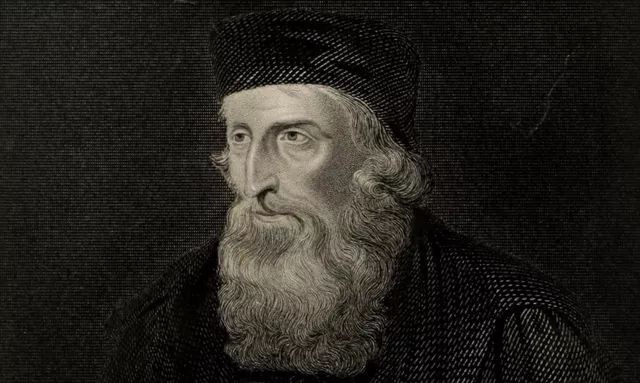
Founding fathers of scientific thinking - John Wycliffe
Brief history of atheist thought in Europe, XII century c.e.
HistoricalBrief history of atheist thought in Europe, XII century c.e.
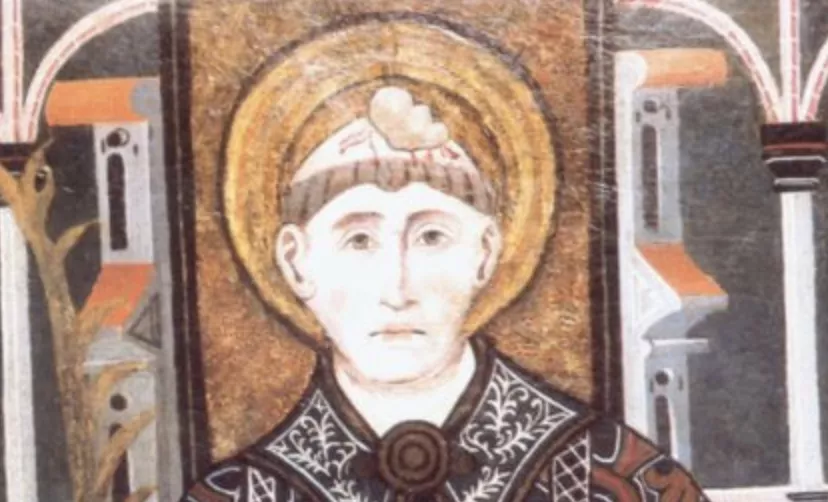
Francesc Eiximenis is a Catalan theologian of the 13th century who inflicted significant influence on the political and social events in his region, yet he is still obscured until present day. Many of his works and research about him is not translated to English, the few scholars who study his works remain largely isolated to Spain.
Bio
"Francesc Eiximenis, born in Gerona about the year 1330, is regarded as one of the most prolific authors of Catalan letters. His literary production is both lengthy and numerous; it is, however, lamentable that several of his works have been lost and, to date, some of his best known writings have yet to be published. The works of Eiximenis have come down to us in both Catalan and Latin. He preferred to use the vernacular, however, in composing the majority of his works; Latin is used almost exclusively for his writings, both doctrinal and didactic, which are directed solely to the clergy. The enormous popularity which the works of Eiximenis attained during the fifteenth and sixteenth centuries is indicative of his acclaim at the dawn of the Middle Ages. The admirable study by J. Masso-Torrents best illustrates this point: this scholar attested the existence of 150 manuscripts containing works by the Catalan friar, including translations from Catalan to Spanish, French and Latin. Sixteen editions in incunabula have been found, including four translations. During the first half of the sixteenth century, eleven more editions appeared, five of which came into being outside of Spain. The very last of these editions was the Carro de las donas (1542). More than three centuries were to pass before a new edition was to be printed."
Viera, David J. , THE CARRO DE LAS DONAS: TRANSLATION AND ADAPTATION OF THE LLIBRE DE LES PONES OF FRANCESC EIXIMENIS - Catholic University of America Washington, D. C., 1972, pp. 2-3
Eiximenis had access to ruling circles and enjoyed patronage from royals, providing them with spiritual, moral and sometimes governing advice. He was spiritual mentor of Maria de Luna - daughter and heir of the Aragonese noble Lope, relative to Pope Clement V, she was consort to King Martin I of Aragon. Maria was de facto ruler of Catalonia for one year until return of Martin from Sicily.
Maria de Luna - Biography
«Maria was politically active and exerted influence upon society and policy, and was considered to exceed Martin as a ruler. She supported the poor financially, handled taxes, welcomed Jewish and Muslim refugees, aspired to stop the wars between noble clans, including her own family, and wrote to Pope Benedictus XIII to suggest bans toward laws and practises she saw as injustice. She was described as wise, just, merciful, religious without being a fanatic, interested in music and literature but unimpressed by pomp and luxury.»
Academic Dictionaries and Encyclopedias, Maria de Luna - Biography (excerpt) WEB 2023
Work and guidance of Maria de Luna was for Eiximenis a life-long project. He dedicated his effort to bring up “a perfect ruler”, for which Maria de Luna seemed to be a great candidate. 13th and early 14th centuries marked the growing popularity and success of the kingdom of Aragon in Europe, Maria’s political and social activities certainly contributed to this success.
"On 15 July 1392, Eiximenis wrote Martin, who was in Sicily handing over this kingdom to his son, Martin the Younger. His letter (Doc., 2:399-403) is for the most part cordial, and ends by praising Maria de Luna, Martin's wife: «dona excellent e savia e de muyller de tan gran senyor, en molta honestat e bonea e per aytal se fa tenir davant Déu e davant homens» (Doc., 2:403).
Maria de Luna, more than any member of the royal family, exemplified Eiximenis' idea of the perfect regent and provided a model for the ideal Christian woman for his treatise Llibre de les dones (c. 1391). Maria was simple, religious, and modest. During her one-year regency she defended Martin's right to the throne against the rebellious Count of Foix. With advice from her counselors, Maria supported Martin and helped him to determine policy. Through her concern for merchants and the poor and her defense of Jewish and Moorish minorities, she won their respect. She also tried to reconcile warring factions in Valencia.
Maria contributed to the Franciscans and founded several new convents and monasteries. She also donated funds to the Observant house at Murvedre, where Eiximenis was asked to select its personnel and administration. Her preference for the Franciscans and Valencia and her fondness for devotional works, especially prayer books, further won her the admiration of Eiximenis, who in his oId age preferred writing prayer manuals and ascetic works, including the Scala Dei, which he dedicated to Maria, and a volume on the life of Christ.19 She gave monetary gifts to the poor and to religious orders, especially the Franciscans and Celestines. In tum Maria received services from Franciscans and Eiximenis. She accepted spiritual counsel from Joan Eiximeno, her confessor, and from Eiximenis himself, who witnessed her last will and testament in 1407 and comforted her in her dying moments."
Viera David J. , Francesc Eiximenis and the Royal House of Aragon: A Mutual Dependence - Catalan Review, Vol. III, number 2 (1989), p. 183-189
Most socially innovative works of Francesc Eiximenis were “Dotzè”, that addressed the moral guidance for a ruler and ruled community and “Llibre de les dones” - behavioral guide for “perfect” women.
“Llibre de les dones”, although for the most part dedicated to religo-conservative approach to women appearance and conduct is an interested undertake for a few reasons: first, in 13th century it was not common for women to be educated and Eiximenis promoting the idea of literacy and independence as well an acceptance for divorced and widowed women. He outlines women's rights to get divorced from an abusive husband. Second, this work addresses behavior and moral attributes of a queen, as a sole ruler - novel view in his time.
Eiximenis went much further from traditional «morality guidance for self virtue» that was preached by his contemporaries. He proposes a concept of society that is based on heavenly order and the ideas of “Invisible Church” (that resembled his John Wycliffe's «Church in heaven; Church in purgatory; and the Church on earth concepts that represented the model for an ideal society based on faith (Conti 2017).
"Most of what we do know about Eiximenis begins from the point at which he began his prolific outpouring of writing when he was about fifty. We learn that from 1368 until 1408 he lived in Valencia and, during those years, actively participated in local government. He served as father confessor to Juan I and the Duke of Montblanc, later Martín el Humano. In 1387 he presented the eulogy at the royal funeral of King Pedro el Ceremonioso. In 1408, shortly before his death, he was appointed to the Council of Perpignan by Benedict XIII and was also named Patriarch of Jerusalem and Bishop of Elna. He died in Perpignan late in 1408 or early in 1409.
Most of what Eiximenis wrote deals with religious dogma and moral theology but, at the same time, offers an ample description of the life and customs of fourteenth-century Valencian society. His most ambitious work, his "obrada," as King Pedro called it, is Lo Crestià, an encyclopedic guide to Christianity. Eiximenis intended to divide the text into thirteen books, symbolic of the lives of Christ and the twelve apostles. Only the first three and the twelfth are extant, though these comprise 2,587 chapters, but in the twelfth book, Eiximenis makes reference to the fifth, sixth, eighth, tenth and eleventh in such a way that we might assume that they had already been written (Rogers xv). Whether the other books were completed and lost or whether Eiximenis had them partially written or simply had abundant notes in preparation for writing is not certain.
The first volume, Primer, composed c.1378-1381 and dedicated to Pedro III, compares Christianity to Judaism and Islam, and explains the Christian view of such principles as natural law, grace, and revelation. Primer also includes Eiximenis' plan for the entire compendium and identifies his intended audience as, not only the "scientífiques e letrades," but also, and especially, "persones simples e legues e sens grans letres."
Segon (1382-1383) cautions Christians against the temptations of the devil, and describes the merits derived from resisting those temptations and remaining true to the Christian code of ethics.
Terçer (c.1384) discusses the fall of man from grace through his weakness and evil ways. Eiximenis takes advantage of this topic to cite the failings of some of his contemporaries.
Dotzè (completed in 1387) deals with the function and responsibilities of a ruler. Incorporated into this volume is Regiment de la cosa pública, a treatise Eiximenis had written in 1383 at the request of the rulers of Valencia. The Regiment contains a letter dedicated to the jurats of Valencia advising them on matters of good government, and a description extolling the beauty and virtue of Valencia. It also sets forth the duties of citizens to their community.
...
One of the most popular works of Eiximenis was Llibre de les dones, a moral guide for women. The date of its composition is uncertain, but estimates range from 1388 to 1396. Through short stories and anecdotes, Eiximenis describes "how the perfect woman should behave." This work explores such topics as sin and confession, prayer, virtue, chastity, and charity, and although it deals with five different stations of women (children, maidens, married women, widows and nuns), most of the text is dedicated to nuns. Llibre de les dones was widely read throughout Spain, and a Spanish translation entitled Carro de las mujeres was used in the education of the daughters of Ferdinand and Isabel (Wittlin, Psalterium 8). This text later inspired the Corbacho of the Arcipreste de Talavera."
Gillette, M., A paleographic transcription and edition of Francesc Eiximenis' "Libro Delos Angeles" (thesis) - Pennsylvania State University 1996, pp. 8-10
Eiximenis extends the idea of contingency to existence of the cities, making their purpose and existence dependent on “God’s providence”. Therefore, an Ideal city needs to resemble the City of God in mirror-like fashion, so a virtuous people and virtuous community could naturally arise.
Eiximenis’s view of the ideal society have many advanced ideas for his time, although it have to be noted, that this ideas was not unique. Nevertheless, the outline, combination and fact of expression was a significant social innovation in the Catalonia region. Moreover, those ideas became popular and supported by the ruling elites of the time.
He does not propose a social revolution, but stresses the support of existing structures of communal and economical relations, that should be reformed and advanced in accordance with the spirit of The Scripture in the pragmatic way. He sees that the well-being of the community is dependent on the function of the financial aspect that should be guided by principles of virtue. The whole structure of the society is interdependent and each part of it should be able to counterbalance others.
"Eiximenis referred often in the first part of the Dotzè to St. Augustine, particularly to his De civitate Dei. From the city of God, Eiximenis has chosen a model for his own ideal human society. He states this specifically in chapter 4: "la ciutat material bé ordenada en lo mán, ymatge e figura és de la celestial ciutat" (p. 11, 11. 15-16). Cities exist because of God: they were first built to honour Him and without His providence they will cease to exist.
Eiximenis draws comparisons between the city of God and the cities of human beings. The celestial city is the "casa del Rey de glòria" (p. 7, 1. 12); the earthly city is the home of men and women. The world is portrayed as one beautiful and orderly city, which represents the heavenly city created by God (p. 9, 11. 1618). God has instilled in human beings the desire to live in communities to protect them from evil (p. 11, 11. 5-6); life in these communities reflects the life to come in the glorious city of God: "la ciutat material . . . representa a nós [ la ciutat celestial] en aquesta present vida a manera de un bell mirall representant la ymage de aquell qui s'i mira" (p. 11, 11. 15-18).
In chapter four, Eiximenis makes this connection absolutely clear, when he tells his readers that only by living virtuously in this world can they hope to go to Heaven:
…(quote in Catalan omitted)
Eiximenis offers the book as a guide to the Christian way of life, to help people to live righteously and eventually to live in grace in the City of God. Its exhortations to maintain a lawful and orderly society were welcomed by the "jurats" of Valencia; who placed the book on public display in the city hall.
While I have said that Eiximenis frequently quoted or referred to historical, literary and Biblical authorities in the course of his writings, this does not mean that he merely repeated what his authorities had to say. He sometimes made reference to an authority in order to refute a particular philosophy or belief: for example, in chapter 93 he takes Socrates to task for suggesting that women should take up arms to defend the city.
Eiximenis made very emphatic statements about various topics in the Dotzè. One of these is his perception of the role of merchants within the community; he praised the merchants and held them to be the cornerstone of a well-run community..."
Rogers, Donna Mary, A partial edition of Francesc Eiximenis' Dotzè Del Crestia - University of Toronto, CA 1987, pp 40-43
Promoting participation in the life and development of the community by all its members, Eiximenis makes his main points on education of the elites and eradication of idleness in the communal services. He proposes a multifaceted approach to an army, that should be able to be involved in the civilian activities in peacetime, occupations for the handicapped as well as (more) efficient urban design that will convey the meaning of spirituality for the community as a whole.
Eiximenis' propositions were in contrast to the reality of fragmented self interest of many groups that comprised Valencian society of his time. However, brewing unrest in Catalonia in the end of the 13th century presented an opportunity for his ideas to be popularized.
Class conflict that was escalating in Valencia was blamed on excessive privilege of the aristocracy and outsider influence; naturally, merchants and “public government” should be part of the solution, according to Eiximenis. However, there was an innovative idea of “compact” government with the “Holy King” as its head, precursor to “government branches” as we know it today.
"It is interesting to note that Eiximenis does not generally support these statements with quotations from well-known authorities. In the case of the passage quoted above from the Regiment de la cosa pública his authority is one "Filògolus, moralista," of whom Molins de Rei says "no coneixem aquest autor." In the following chapter (ch. 34) Eiximenis makes a vague reference to "alguns antics e savis" and praises those "beneits prínceps e prelats passats" who favoured merchants. Here one finds no St. Augustine, no Aristotle, no Plato: this is Eiximenis supporting the status quo of his society, a society based on trade and commerce. Throughout the fourteenth century, the nobility of the Crown of Aragon aligned itself against the king in an attempt to hold on to its feudal privileges; at the same time, the flourishing trade that supported the Crown also gave rise to a new middle class of merchants and civil servants, whose financial well-being depended on the continuing expansion of that trade. The monarch relied on the power of crown appointment and patronage to ensure the support of this middle class to counter the power of the nobility. Eiximenis, as one who had benefitted from this for a group patronage, naturally would have expressed his support for a group that was so politically important to the king, and to which his own family belonged.
This practical outlook breaks with the tradition of other mediaeval Catalan writers like Ramon Llull and Anselm Turmeda. Whether Eiximenis himself sincerely held these ideas or expressed them out of expediency is a matter of speculation; in any case, his pragmatic approach sets him apart from other writers of his time.
Eiximenis also strongly advocates education for princes, so that they will rule wisely and avoid tyranny. He refers again to the value of "gramàtica," begun at an early age, for communication and to enable the prince to study "llibres difícils... les quals no entendria sens gramàtica." He recommends the study of the subjects of the quadrivium (music, arithmetic, geometry and astronomy) "per tal que no atenen a apendre de viltats e de tirania e d'altres mals prou." He suggests that princes be taught to write, "car l'escriure serveix sens fi als grans senyors en quant sovint los és mester que ells escriven alcunes coses per llur membrar, les quals no sàpia persona altra per res. Escriuen així a altres coses familiars, les quals si eren per altres sabudes seria gran perill."
According to Eiximenis, not only the princes but all of the members of the nobility should be educated (this is quite logical, as he could hardly recommend the education of merchants otherwise). In chapter 17 of the Dotzè, citing the «ystòria oriental,» he states that Olympius of Syria ordered that all the children of the nobility had to study for at least three years; anyone who refused became ineligible to hold public office (p. 55, 11. 29ff). In chapter 192 of the Dotzè, he lists the many books with which the "cavaller, e noble, e ducs e prínceps" should be familiar: "Vegecius De re militari, e Valerius Maximum e Titus Livius, e Boeci De consolatione e De scolastica disciplina, e Hugo en lo seu Didascalion e la Summa de Col.lections, diverses altres obretes que 51 féu frater Johannes Gal.lensis de l'orde dels Frares Menors." Here again, he recommends "gramàtica": "deuen saber los llenguatges qui els son entorn. E aprês deuen saber gramàtica per entendre los bons llibres qui sân posats en llatí, e per saber parlar ab gent estranya."
Every member of the community has a part to play in Eiximenis' concept of society: he disapproves of people with nothing to do. For example, in chapter 96 of the Dotzè (pp. 317-8) he writes that the city should not support a permanent army for several reasons: first, because every man should defend his city in wartime; second, because the city would find it burdensome to support such an army, especially since the soldiers have nothing to do in peacetime and "per conseguent convertir-s'ien a lladronicis e a adulteris"; and third, the presence of a standing army means that the citizens who would otherwise form a militia "tornaran axí com àsens e com a fembres, com no haguessen negun exercici d'armes; ans lavors los jovens aquells se pintaran e hiran ornats e pentinats axí com les dones, e dar-s'àn a luxúria e a fer molt de mal a la comunitat."
In chapter 22 of the Regiment de la cosa pública (ch. 378 of the Dotzè). Eiximenis expresses similar sentiments about the dangers of idleness. He suggests pastimes for every member of the community, from the knights to the clerics (except for the labourers: "D'aquests no en cal parlar, car per força se han a ocupar si volen viure"). Eiximenis even suggests occupations for the blind, amputees and lepers: literally every member of society can make a useful contribution.
Eiximenis also expresses very specific ideas about town planning. In the Dotzè he sets out some of these ideas within a three-part organisation of society, the third part of which pertains to the physical form of the city. Near the beginning of the Dotzè (ch. 7-8) he writes that the cathedral should be situated in the centre of the city, facing east, that certain parish churches should be built and that monasteries should be located on the outskirts of the city at equal distances from each other. Subsequently, he begins to describe even more specifically the outward form of his ideal city, expanding upon these general comments.
In her 1984 study of Eiximenis and his concept of the city, Soledad Vila, a art historian, examines his specific instructions for its planning and construction. Eiximenis recommends that the city be built in a square shape ("tota ciutat devia ésser cuadrata"); Vila sees this conformation as a reproduction of the Cosmos and its ordering in Genesis, according to the divisions made by God in creating order out of chaos. She also comments that the square shape is pragmatic, realistic, while the circle shape (which 55 Eiximenis rejects in ch. 111) is a more celestial symbol.
Eiximenis goes on to specify that the four sides of the city should each have a main gate, with a wide street running from east to west and another from north to south. Vila sees the resulting cross within the square as another representation of the Cosmos. The four large blocks created by the two intersecting main streets are then to be subdivided further into smaller squares by secondary streets. Each of the four main blocks, or "quartons principals", is to have a "plaça". The prince's palace, the symbol of temporal power, is to adjoin one of the walls and should have its own gate for entering or leaving the city.
Eiximenis then reiterates his recommendation from chapter 8: the cathedral should be situated in the centre of the city. He adds here in chapter 110 that it should have an adjoining "plaça" of its own, protected by high walls. Vila comments that Eiximenis has signalled the importance of religious concerns over temporal ones by his placement of the church in the centre of the city and the prince's palace on the perimeter: the city's physical centre is also its spiritual centre; moreover, by "protecting" the church plaza he has closed it off to the people and has separated the 59 church physically from its followers.
After specifying the physical design of his ideal city, Eiximenis proceeds to people it:
Per cascú dels quatre cuarters de la ciutat deu ésser at un orde dels mendicants e parroquies certes e officis certs e mesclats, per tal que en cascuna de les quatre porcions de la dita ciutat se tròpien de tots officis; envers lo portal qui va vers la terra o la orta o los camps deuen star los lauradors; e en cascuna de les dites quatre deu haver carneceria, pescateria, almodi e tot recapte per los habitants . . .
It is interesting to note that Eiximenis lists the mendicant orders before mentioning the butchers and fishmongers. Soledad Vila comments that "bajo la inspiración de la pobreza franciscana, tan cercana a la justicia, está en contacto directo con los ciudadanos la espiritualidad cristiana, participa de sus vidas, de sus aspiraciones, de sus privaciones y convive en su medio ambiente." The Franciscans, she says, were the manifestation of this spirituality assimilated into society, a link between the public life of the city and the "separate" life of the church.
Vila goes on to state that Eiximenis' ordered square plan for the construction of cities was an innovation in the Iberian peninsula, an early manifestation of a basic urban design that would be developed throughout the Renaissance, especially in Italy. She concludes that Eiximenis' concept of the city, although chronologically mediaeval, looks forward to the Renaissance: he began from a solid base of Augustinian ideals and gradually shifted to a more practical, pragmatic approach to urbanism."
Rogers, Donna Mary, A partial edition of Francesc Eiximenis' Dotze Del Crestia - University of Toronto, CA 1987 pp. 43-48
Eiximenis specifically was concerned with the merchant class as a main force that drove society forward. Despite the power of the kings and influence of the clergy, he recognised that politics and faith lack pragmatism of trade that creates economical balance. It is fair to assume that merchants and traders had provided support in return.
He managed to implement a fitting strategy to proselytize his works. While his countryman clinged to work of classics and wrote works in catalan to translate later to Latin, Eiximenis wrote his most influential work in Latin from the start, because that was “language of the clergy”. His book was placed in city hall, where anybody could read it. He also addressed his work to high priests and royals, which added to the popularity of his ideas.
His ideas of social balance and regional autonomy provided influence well into the 15th century and inspired the anti-monarchist, anti-feudal autonomist Revolt of the Brotherhoods.
"During Eiximenis’s lifetime, however, both the city and the kingdom were violent, fractious, and divided. A major problem was factional feuding (bandositats), which was carried out by the leading noble families of the kingdom and their dependents. As the Solers and the Vilaraguts faced off against the rival Centelles clan, ties of consanguinity, marriage, patronage, and obligation extended the struggle through the whole of Valencian society. Artisans, peasants, and slaves all found themselves swept up in a self-perpetuating spiral of violence and revenge. The prosperity, peace, and stability of the city were under grave threat, and became a serious preoccupation for and drain on the energies of the monarchy. Eiximenis, who by inclination and birth sympathized with the industry of the Catalan bourgeoisie, naturally took the side of the merchants and artisans, and attributed the civil unrest to privileged and unproductive nobility. Idle hands were said to do the devil’s work, and, thus, Eiximenis was very much against indolence, and a champion of industriousness (within the established class and gender order of the day, of course). The challenges of dealing with this unrest, which Eiximenis blamed on privileged outsiders, was a catalyst for his development of the “notion of the “public government” (cosa pública). In the Regiment de la cosa pública, the 1383 treatise he dedicated to the jurats of Valencia, he defined “public government” as “any community of folk united and living under the same law, and lordship, and customs, whether this is a kingdom, or a city, or a town, or a castle, or any similar community which is comprised of more than one household.
In Eiximenis’s ideal, this “republic” comprised the worldly community and the corpus mysticum, the “body of Christ '' that incorporates all members of society, both cleric and lay, that are under the church. For Eiximenis, pragmatist that he was, human government was inseparable from either the church or morality. Tellingly, the treatise was excerpted from his magnum opus, Lo Crestià, and it was here that he outlined his most applauded paradigm for government: the pactisme (compact). Eiximenis believed that to function effectively government had to be established on the basis of a “compact,” an agreement between the ruler—who had to be subordinated to the law of God and the influence of the pope in order to avoid tyranny—and his subjects. For him, the ideal monarch was a holy king, like Saint Louis IX of France (1214–70). Eiximenis was certainly a sophisticated political theorist, but he was no Machiavelli."
Silleras-Fernandez, Nuria, “Chariots of Ladies: Francesc Eiximenis and the Court Culture of Medieval and Early Modern Iberia.” - Cornell University 2015, Apple Books.
Eiximenis realistic approach to evaluation of the real and spiritual life lead him to step away from dogmatic preaching. He was able to see the logic of the social forces at play, and was able to separate common sense and educated thinking. Instead of seeking fame as a part of the wide clergy, he concentrated on the local affairs, winning the rust of the local authorities. His books were in public access, that help to disseminate his code of ethnics and science-oriented logic.
His vision of social structure based on equality inspared rebellion against the monarchy and strive independence in the form of the republic.
"Compared with Ramon Llull, Arnald of Villanova and Vincent Ferrer, Eiximenis' life was rather uncomplicated and uneventful. His religious vocation became apparent in his earliest years and was never shaken by contemporary spiritual movements. His travels led him to conventual libraries rather than to secularized universities, and he entered royal households only as a humble confessor. By formation and preference, he was fully imbued with the medieval spirit, and it is this medieval common sense and pragmatism which give certain statements of his, such as those concerning the social importance of the merchant class, a surprisingly modern aspect. An autodidact to a large degree and a disciple of saints Paul and Francis, he was not tempted to abuse the scholastic method in arcane theological disputes, but preferred to give moral guidance to the people, speaking to them on their level and in their language.
But even though Eiximenis kept himself away from the religious circles which formed in Valencia among admirers of Llull's combinatory method and followers of Vincent Ferrer, many of whom were intolerant fanatics, he was very much part of the cultural and literary changes of those decades. In the writings of the royal secretary Bernat Metge, interest in humanism made its appearance in Barcelona, without, however, much success. In Valencia, the Dominican theologian and translator Antoni Canals also felt the attraction of the classics, but he did not move beyond Valerius Maximus and Seneca (and also plagiarized the description of Paradise Eiximenis makes at the end of the Llibre de les dones). However, while late-fourteenth-century Valencian religious writers were still totally dependent on traditional medieval literature as far as the content of their work is concerned, their language takes on distinct rhetorical mannerisms in a new classicizing stylistic movement known as "Valencian prose."
Since Eiximenis' Vita Christi has not yet been published, it is difficult to say if he too changed his style in his later Catalan works. Another scenario, however, seems more likely. In chapter 55 of the Llibre de les dones, Eiximenis quotes from Isaiah 3:16-26 more lines than the context requires, simply, so it appears, out of his interest and pleasure in rare Latin words: "... mutatoria et palliola et linteamina et acus et specula et sindones et vittas et therista." He was aware of the existence and advantages of various vels of style, but he associated low style with the vernacular, high style with Latin: the conclusion of a humanist. Ramon Llull wanted pan-European circulation for his works, but he could only write well in Catalan, and had to ask for translations into Latin. Eiximenis accepted the challenge to write directly in Latin. As for his books for the clergy, like the Ars praedicandi and the Pastorale, he wrote them in Latin because this was the language of the clergy, not from any desire for literary fame or international circulation. But the Psalterium is different. Its beginnings show that Eiximenis was, at first, writing for his own use, forcing himself to learn the perfect style for addressing God. He succeeded admirably - and would have deserved the wider circulation at the papal court he ultimately hoped for, more for the glory of God than his own because the concepts to be expressed were ready for this advanced stylistic level. He would have failed had he simply tried to find a content for an artificial new style elaborated by others.
...
Eiximenis' enduring success is due to his grasp of the potential, but also the weakness, of human nature, his balanced sense of pastoral duty and practical vision. Having set himself more realistic goals, Eiximenis was spared the disappointments of Ramon Llull. The fact that his books were exhibited in the town hall of Valencia must have given him a feeling of achievement. He had the trust of the city-fathers, and in a quiet way he probably influenced many of their decisions. His discussions with prominent citizens of Valencia are reflected in the Doctrina compendiosa, which, even though not written by Eiximenis himself, reflects his attitudes on ethics.
Eiximenis' influence at court is more difficult to evaluate. Even though he says he wrote the Crestià "on orders of King Peter," we cannot conclude that volumes one, two or three are dedicated to him. The twelfth was written for Count Alfons; three later works were dedicated to members of the high nobility, and two to bishops. Not pride, but concern over pastoral effectiveness, made medieval religious writers select their sponsors; the luxurious volumes in the royal library did not circulate much. Still, we wonder if Eiximenis might not have tried to avoid getting involved at court. King Peter's liaison and then marriage with the widow Sibyl of Fortià led to open hostility with his son John, himself no great model of moral fortitude, and must have caused difficult dilemmas for their religious advisors. It is tempting to search in Eiximenis' writings for indirect criticisms of royal behavior, actions or legislation, such as the repeated censure of the custom of lodging.
...
Eiximenis' association with Pope Benedict is obvious from the Psalterium's dedication, which may explain the absence of copies of this work outside of eastern Spain. His relation to the Aragonese pope cannot be deduced from his Catalan works. These enjoyed a large audience in Spain and France long into the fifteenth and even sixteenth century. In spite of profound sociological changes and the decline of Catalan letters in Valencia and Barcelona, Eiximenis' works were often copied and were among the first books printed there. It seems as though the moralizing Terç was enjoyed especially by pessimists, while in 1520 the pro-republican prophecies in the Dotzè influenced the rebellious brotherhood of Valencian craftsmen."
Wittlin, Curt J. , Psalterium alias Laudatorium - Pontifical Institute of Mediaeval Studies, CA 1988, pp. 11-13
Brief history of atheist thought in Europe, XII century c.e.
Historical
Brief history of atheist thought in Europe, XII century c.e.
Historical
Brief history of atheist thought in Europe, XII century c.e.
Historical