Founding fathers of scientific thinking - John Duns Scotus
Brief history of atheist thought in Europe, XII century c.e.
HistoricalBrief history of atheist thought in Europe, XII century c.e.
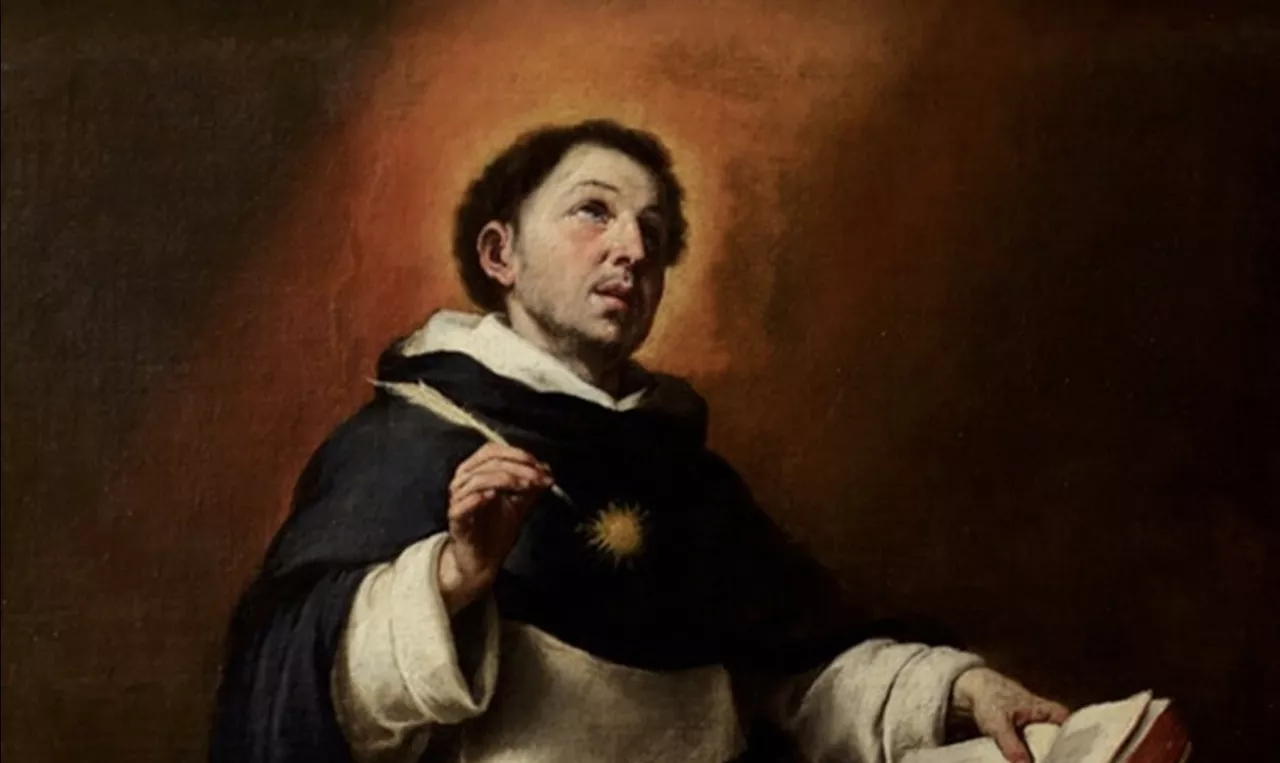
Thomas Aquinas - theologian, scholar of thirteenth-century, was born in Italy into an affluent family and attended studies at Monte Cassino monastery during his childhood. He became a Dominican friar after moving to Paris in 1248, his thinking is influenced heavily by Albert the Great that explored a fusion of Greek and Arab philosophy.
Aquinas' life is very well documented.
Rational knowability of the world
Aquinas' contribution into the development of scientific thinking is a development of theoretical argument based on rational philosophy - another precursor to a “scientific method” known to us today. He rationalizes the existence of universes and humans as part of it that were created for a reason, therefore he deduces that the universe has inherent knowability to man by application of reason. The ability to reason, Aquinas attributed to the gift from God.
Scientific Revolution (1400-1700): The World’s Most Overly Simplified Timeline Of What, When and Why
"1225-1274: Thomas Aquinas' philosophical scholasticism begins moving scholars away from Platonism and toward Aristotelian metaphysics (see here also) as the pre-eminent means of understanding the natural world and how we make sense of it. Aquinas prefigures the Renaissance in his influential approach to reconciling Aristotelian Classical and Christian theology (See Summa Theologic 1265-1274).
Aquinas's revolutionary argument in a nutshell: a) God created an ordered natural world. b) God also created man's ability to use reason. Rational philosophy (Aristotelian analytical method) is a valid compliment to theology; God created man's intellect and will, thus, celebrating and developing human freedom, intellect and will would promote God's will. c) Therefore: If God created an ordered, natural world, man could and should apply reason to understand the natural world, thereby better understanding and celebrating the will of God as manifest in his creation.
Scientific Revolution (1400-1700): The World’s Most Overly Simplified Timeline Of What, When and Why (Article) - University of Idaho 2023, WEB 2023
The main theological dogma of that time postulate, that God was creator of the universe, the prime beginning of everything. Transitioning from the Aristotelian view of the act of creation through force (wrestling of gods) Thomas Aquinas interpreted the creation as a “non-violent” act: God “spoke” the universe into existence. Moreover, Aquinas extrapolated on this by applying the notion of cause and effect, creating his famous logic chain of five ways to prove the existence of God.
"Thomas Aquinas' Five Ways to Prove the Existence of God:
1. The First Way: Motion. 2. The Second Way: Efficient Cause. 3. The Third Way: Possibility and Necessity. 4. The Fourth Way: Gradation. 5. The Fifth Way: Design. General Remarks: * Later thinkers classed all five ways as variants of the cosmological argument for the existence of God. Cosmology is the study of the origins and structure of the universe; each of the five ways is a reflection on the conditions which must have been in place in order for the universe, or some observed feature of the universe, to come about. * The fourth way looks, at first blush, like a variation on the ontological argument. But like the other four ways, it's a posteriori. Anselm's argument is a priori. It is criticized by Aquinas in Summa I.II.1 (p. 417). Further, says Aquinas (I.II.2), any demonstration of the existence of God must be from the effects of God known to us; it must be a posteriori. * The fifth way resembles a version of the teleological argument, or argument from design. Though the canonical argument from design is of much later vintage (17 Century), Aquinas might not object to this identification. The teleological argument, after all, is a posteriori.
The First Way: Motion 1. All bodies are either potentially in motion or actually in motion. 2. "But nothing can be reduced from potentiality to actuality, except by something in a state of actuality" (419). 3. Nothing can be at once in both actuality and potentiality in the same respect. 4. Therefore nothing can be at once in both actuality and potentiality with respect to motion 5. Therefore nothing can move itself; it must be put into motion by something else. 6. If there were no "first mover, moved by no other" there would be no motion. 7. But there is motion. 8. Therefore there is a first mover, God.
The Second Way: Efficient Cause 1. Nothing is the efficient cause of itself. 2. If A is the efficient cause of B, then if A is absent, so is B. 3. Efficient causes are ordered from first cause, through intermediate cause(s), to ultimate effect. 4. By (2) and (3), if there is no first cause, there cannot be any ultimate effect. 5. But there are effects. 6. Therefore there must be a first cause for all of them: God.
The Third Way: Possibility and Necessity 1. "We find in nature things that are possible to be and not to be:" contingent beings. 2. Everything is either necessary or contingent. 3. Assume that everything is contingent. 4. "It is impossible for [contingent beings] always to exist, for that which can not-be at some time is not." 5. Therefore, by (3) and (4), at one time there was nothing. 6. "That which does not exist begins to exist only through something already existing." 7. Therefore, by (5) and (6), there is nothing now. 8. But there is something now! 9. Therefore (3) is false. 10. Therefore, by (2), there is a necessary being: God.
The Fourth Way: Gradation 1. There is a gradation to be found in things: some are better (hotter, colder, etc.) than others. 2. Things are X in proportion to how closely the resemble that which is most X. 3. Therefore, if there is nothing which is most X, there can be nothing which is good. 4. It follows that if anything is good, there must be something that is most good. 5. "Therefore there must also be something which is to all beings the cause of their being, goodness, and every other perfection; and this we call God".
The Fifth Way: Design 1. We observe that natural bodies act toward ends. 2. Anything that acts toward an end either acts out of knowledge, or under the direction of something with knowledge, "as the arrow is directed by the archer." 3. But many natural beings lack knowledge. 4. "Therefore some intelligent being exists by whom all natural things are directed to their end; and this being we call God"."
Thomas Aquinas' Five Ways to Prove the Existence of God (article) - CSULB, USA, WEB 2023
Formulation of logic-based inquiry format
The significance of the “five ways” is not actually in what they were aimed to prove, we can simply subtract “god” from the equation and see that the argument would not change. The “five ways” represented a construction of the theoretic principle that was adopted later, but scientists that explore nature independently of theological perspectives. It is also a dialectical argument that creates order in the experience for someone to discover “hidden truth”.
Aquinas developed a standard format that can be applied to the question or dispute, a tool that he included in his theoretical pursuit. It consists of four steps:
In that way, he assumed that most relevant questions will be asked, most relevant difficulties addressed and most relevant conclusions reached.
Search for universal principles and perfection
However, Aquinas could not resolve all the contradictions of his reasoning and often concluded with cyclical statements. His reasoning and logic was sound as a process but was based on metaphysical assumptions, therefore they couldn't provide accurate insights into the real world.
Thomas Aquinas - Natural Law
"Aquinas’s moral theory does not offer the sort of brief and comprehensive criterion for rightness and wrongness that draws students toward consequentialism or Kant’s moral philosophy. What he offers instead is a deep and systematic explanation of where morality comes from, yielding a moral code that is impressively responsive to the changing circumstances of human life.
The key text for Aquinas’s thinking about the moral law is his Treatise on Law (ST 1a2ae 90–108). There he distinguishes between four kinds of law that play a role in guiding right human action:
The eternal law governs everything, but can serve to guide us only when it is somehow transmitted to us. One way in which it is transmitted is through divine law, preeminently through the Bible, and here Aquinas distinguishes between the old law of the Hebrew Bible (qq. 98–105) and the new law described in the Gospel (qq. 106–8). The other form of transmission, philosophically the most interesting part of his account, is the natural law. Whereas human law is the contingent result of social and political organization, the natural law is innate within us. Since Aquinas thinks that God orders everything to its proper end (§8.1), there is a sense in which all things follow a natural law by which they participate in the eternal law. But when Aquinas refers to natural law in a moral context, he means the distinctive way in which rational agents have been ordered to achieve their proper end; hence he has in mind a law that governs the mind. Thus, “the law of nature is nothing other than the light of intellect, placed within us by God, through which we grasp what is to be done and what is to be avoided” (On the Ten Commandments [Collationes in decem praeceptis] proem).
So described, natural law might be nothing more than an innate inclination to accept a fixed set of moral laws prescribed by God. In fact, however, Aquinas’s theory offers something more complex and nuanced, because he thinks the moral law arises not out of brutely innate inclination but out of rational reflection on the good (Finnis 1998 ch. 3; Rhonheimer 1987 [2000]). Mirroring the way he develops theoretical science out of first principles (§6.3), he thinks moral reasoning also rises out of self-evident first principles, the grasp of which is the defining task of the intellect’s power of synderesis (ST 1a 79.12). The most fundamental such precept is this:
The good should be done and pursued, and the bad should be avoided. (ST 1a2ae 94.2c)"
Pasnau, Robert & Edward N. Zalta & Uri Nodelman (eds.), Thomas Aquinas - The Stanford Encyclopedia of Philosophy (Spring 2023 Edition)
Aquinas assumes that all things to be based on some universal principle (an unfortunate flaw of the mind, that haunts modern scientists as well), and he concludes that some kind of perfection should be a measure of all things. He developed an elaborate cop out tracing everything back to God, an argument that converts all questions into the question of faith.
Thomas Aquinas - Knowledge and Science
"Eventually, the demand that premises be “better known” leads back to the first principles of the science, which are self-evident (per se nota) in the sense that they are known to be true simply in virtue of their terms (Comm. Post. Analytics I.7.8). Nothing could be better known than such a principle, but because these principles are self-evident there is also no need for any further demonstration. Each science has its own starting points—its own first principles—which are not susceptible to demonstration within that science. But not all such first principles are strictly self-evident. Within physics, for instance, it is a first principle that there is motion, but that is neither absolutely necessary nor strictly self-evident. Accordingly, again following Aristotle, Aquinas orders the various sciences according to relations of “subalternation”, such that biology is subalternate to physics, and physics to metaphysics. In general, “the principles of a lower science are proved by the principles of a higher science” (Comm. Post. Analytics I.17.5). Among the natural speculative sciences—that is, setting theology and ethics aside—the preeminent science is metaphysics, or first philosophy, “from which all the other sciences follow, taking their principles from it” (Comm. Boethius De trin. 5.1c). (On the structure of the sciences see Maurer 1986; Wippel 1995a; Dougherty 2004.)
This sort of foundationalist, infallibilist theory of knowledge is now thought of as Cartesian, but Descartes is simply following the Aristotelian tradition for which Aquinas became the preeminent spokesman. For Aquinas himself, however, the account just described serves as an aspirational ideal rather than a description of something we have actually attained. In practice, even where we have demonstrative knowledge, we usually cannot trace the principles all the way back to ultimate first principles like the law of non-contradiction. Critical questions, like the non-eternity of the world (§3), are contingent on the free choice of God and so have to be taken on faith. Even in places where certainty is possible in principle, large gaps in our knowledge remain. In general, “our cognition is so weak that no philosopher could have ever completely investigated the nature of a single fly” (On the Apostles’ Creed [Collatio in symbolum Apostolorum], proem). Accordingly, Aquinas distinguishes among various non-ideal cases. A demonstration that grasps the cause of a thing is a demonstration propter quid, but often—as in proving God’s existence—the best we can have is a demonstration quia, which tells us only that a thing is so. Much of what we know holds true only for the most part, and so fails to be necessary, and often the premises of an argument cannot be traced back to self-evident principles, in which case our argument is dialectical rather than demonstrative, yielding a conclusion that is merely plausible (probabilis) rather than apodictic."
Pasnau, Robert & Edward N. Zalta & Uri Nodelman (eds.), Thomas Aquinas - The Stanford Encyclopedia of Philosophy (Spring 2023 Edition)
Nevertheless, his contribution in the development of scientific principles could be considered useful, for theoretical and deductive exercises. His way of reasoning proved to be sound, when applied to real data that could provide testable results.
Brief history of atheist thought in Europe, XII century c.e.
Historical
Brief history of atheist thought in Europe, XII century c.e.
Historical
Standardization practises in organizing complex communities
Historical