
Rule of Chan Buddhism: “A day without work is a day without food”
The philosophy of merit acquisition through labour
HistoricalStandardization practises in organizing complex communities
Annotation
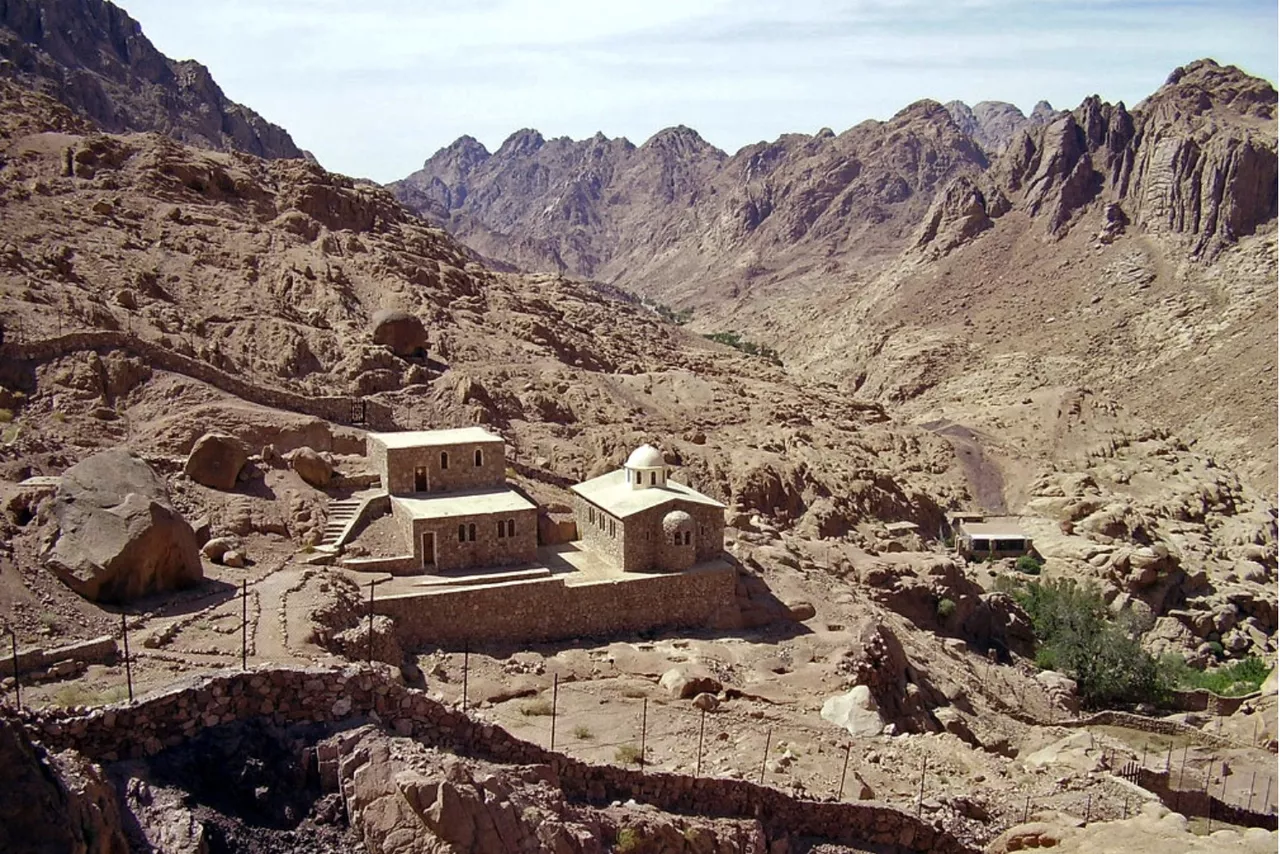
At the beginning of the common era, the so-called “Desert Monasticism” of St. Anthony was born in Egypt, which gave impetus to the development of the St. Pachomian movement. It begins its history in ancient Byzantium with the founding of a monastery at Tabenna on the banks of the Nile in 323 AD. E. (today - the territory of Sudan). Tabenna serves as a “rallying point for monks and nuns” of the rising movement.
“At this time, Egypt was still in its process of mass conversion to Christianity, and for Christians brought up by the Bible, the desert could seem less terrible, and in some aspects even attractive. After all, it was through the desert that God led his people after liberation from Egyptian captivity, in order to eventually lead them to the promised land. John the Baptist matured in the wilderness, and even Jesus himself went there to face the devil. Many zealous Christians decided to remain virgins for the sake of the Lord and lead the life of ascetics, first in the bosom of their families, and then a little further away, on the border of villages, that is, on the border of the desert. Thus, at the end of the 3rd century, monks already lived throughout the Nile Valley and the branches of the Delta, living either in caves on the slopes of the coastal cliffs that hung over the river, or in huts built in the neighborhood.”
Excerpt From: Люсьен Реньё. “Повседневная жизнь отцов-пустынников IV века.” МОСКВА–МОЛОДАЯ ГВАРДИЯ • ПАЛИМПСЕСТ • 2008 Apple Books.
Innovation #1 - Group practice
Newly converted monks went into the desert under the guidance of a mentor-father (Abba), with whom they perfected the practice of meditation (meletē) (Wortley J 2006). They organized small settlements, but the emphasis was always on individual practices designed to move the monk on the legendary path of Anthony the Great (Renier 2008).
Desert monasticism was not an organized movement for a common goal, the actions of each monk were subject to the personal ideas of religious practice.
The key difference between the religious doctrine of the Desert Fathers and the Pachomian movement is that Pachomians abandoned individual practice and moved to group practice, forming a rudimentary precursor of a corporate culture. The daily life of the monks is group oriented and group practiced.
Moving into the fertile valleys of the Nile, Pachomius and his associates became "village ascetics", combining the practice of solitude with village life. This enables the community to coexist with the system of law and taxation of Roman Egypt. (James, 1996). The charismatic personality of Pachomius himself plays an important role in the organization of monastic life. He exemplifies asceticism and strict observance of both religious and community practices, which attracts more people to the monastery and unites the monastic community.
Development of St. Pachomian movement:
- Changing the paradigm of asceticism → Establishing the rules of the community that do NOT contradict the laws of the country → Organization of a monastic community → Construction of the first monastery.
Pachomius planned new monasteries with three key features:
- The location of the monasteries in the fertile territories of the Nile (in contrast to the Desert Hermits)
- Mandatory “rules of life” aimed at monks of different levels;
- Personal example of the abbot in observing the statutes and religious practice;
“He obliged himself to be “the first in observing the rules ... so that, looking at <his> example, all the brethren entrusted to him would be faithful to them.” Thus, seeing the love and holiness of the life of the rector, many brethren quickly began to gather to the Monk Pachomius.” (Samokhin 2009)
Innovation #2 - Adoption of “divine” hierarchy and standardization
Various factors contribute to the successful spread of the movement at the dawn of Christianity, but we want to point out the social and innovative rules of the Rule of Father Pachomius. The main innovation of the Charter was the transfer of a clear hierarchical structure of the biblical paradise kingdom to the structure of the community.
For the first time, adepts of the new Christian religion feel themselves not just as separate entities, but as part of a common brotherhood built according to a scheme that they already understand and worship.
The novelty of the Charters of Pachomius consisted in the following aspects:
- Departure from individual spiritual practice in favor of the collective;
- The introduction of uniformity in the community of monastic life;
- Establishment of Monarchical (centralized) management structure;
A movement led by Saint Pachomius builds thirteen monasteries, with sophisticated standard infrastructure. A system of representatives and managers has been established, clear and understandable rules of behavior, work and interaction between monks are being introduced. All these rules take the form of a charter, which extends to each new monastery, making them a single brotherhood.
The following monastic infrastructure was established:
- 13 monasteries for men, 3 for women;
- Each monastery consisted of 30 or 40 separate houses, in 12 or 13 cells; 3 people in each cell;
- Separate church for prayer meetings;
- Common dining room;
- Kitchen and bakery;
- Hospital;
- Hotel;
- Warehouses (for products, tools, etc.)
- Gardens, kitchen gardens, fields for agriculture;
The following Management Structure was established:
- Pachomius is the head of the whole organization
- One Abba (elder) per monastery;
- The monks are like a single brotherhood;
- Caretakers of houses and their assistants;
- Private housekeepers and consumables;
- hired servants;
However, the initial Charter did not exist as a single text, riles were traditionally written first in Latin, then collected in lists and translated into other languages. Until now, the chronological order of these rules is not entirely clear. With the expansion of the movement, they are constantly revised and subjected to changes by Pachomius and his followers.
There were 144 rules (Pachomian Koinonia) that governed various aspects of monastic life. They are considered the basis for the emergence of all subsequent Orthodox charters.
Saint Jerome described the Rules of Pachomius which stated:
- Strict order when entering the monastery, passing through the monastery, reading psalms, bowing, receiving the right to be blessed in the church;
- The obligatory asceticism of the cell - nothing but bedding, and a few pieces of coarse daily clothing - for work and for sleep;
- Providing the sick with the best care and abundance of food, and indulgence in observing fasts;
- Determination of monks of one profession in one “house”, under the control of one housemaster;
- The appointment of a completed “house” by “one brethren”.
- Weekly report of the "brethren" on the work done to the father of the monastery;
- (Kalamazoo, 1981)
“When St. Pachomius founded monasteries one after another, it was natural for each monastery to consider St. Pachomius himself as its Father, although he installed a special Abba in each monastery. He was directly ordained Abba of the whole brotherhood by God.” (Orthodoxy and the World, WEB 2021)
Innovation #3 - Regulation by virtue
Initially, the monks work on the lands of the monastery for self-sufficiency, over time, the monasteries move to the practice of hired workers. In the monasteries, professionals of various crafts get jobs. But, the monks continue to work physically, which becomes part of religious practice, creating goods for their subsequent monetization. Any monastery property and manufactured goods are considered common property.
The life of a monk is governed by two basic “virtues”: obedience and non-acquisitiveness. It is strictly regulated, starting with appearance, ending with personal relationships.
The main principles are strict discipline, asceticism, “spiritual feats” in the form of self-imposed fasts and vows, regular and uninterrupted rites of worship and reading of psalms. There is strict obedience to elders.
It is forbidden to communicate in the dark, even to pull a splinter out of the leg of another monk, without the permission of the head of the brethren (Kalamazoo, 1981).
There is not much said about punishments, but there is mention of censure and “various other” forms of it.
Regulation of the behavior of monks:
- The monk is in complete submission to the elders;
- Does not leave the monastery without permission;
- Does not arbitrarily change the type of work;
- Does not shy away from work;
- Does not have private property (it was forbidden to appropriate something, even “in words”);
(Sulskaya 2018)
Conclusions
Charters and rules have an impact not only on the Orthodox, but also on the Catholic Church, we can see obvious analogies in the current corporate culture. The charter is easy to reproduce and adapt. Despite being two thousand years old, the Charter sounds quite modern. One can only imagine how progressive he became in its time.
But, these proven practices are simply ignored today. There are leaders who do not consider themselves obliged to abide by the general rules, organizations that cannot establish a clear management discipline, that do not update their rules and charters for decades. Employees who do not respect the work of their colleagues. States that do not provide public health insurance.
Pachomius' example shows that successful practices in organizing complex communities by standardization of work, attention to the problems of participants, logical separation and management of subgroups for one common goal.
Social innovations of St. Pachomius in the 4th century CE
- Community instead of individualism;
- General charter of management;
- The structure of the community management hierarchy;
- Division of labor and creation of self-sufficient craftsmanship;
- Creation of an extensive infrastructure and diversification of production;
- Provision of general healthcare;
The main social transformation is the transition from individual to the practice of the hostel and its standardization, which sets the development of the direction of the monastic movement.
Sources:
Lucien Regneux. "The Daily Life of the Desert Fathers of the 4th Century." Moscow – Young Guards • Palimosest • 2008 Apple Books
Kolb, G.Fr. History of human culture with an outline of forms of government, politics, development of freedom and welfare of peoples / trans. edited by A.A. Reinholdt. [In 2 vols. T. 1-2]. Kyiv; Kharkov: Yuzhno-Russkoye Kn-vo F.A. Ioganson, 1896. Pp. 51-54
Sulskaya N., The influence of the Coptic Church on the formation of monastic communities in Byzantium and Rus' in the 9th - 11th centuries, Graduate thesis of BelSU 2018
WORTLEY J. How the desert fathers «meditated» // Greek, Roman, and Byzantine Studies. – Chicago, 2006. – Vol. 46. – P. 315–328
Withdrawing from the Desert: Pachomius and the Development of Village Monasticism in Upper Egypt Author(s): James E. Goehring, The Harvard Theological Review, Vol. 89, No. 3 (Jul., 1996), pp. 267-285
McNeil, B. (1980). Pachomius Rhusanus on Monastic Reform. The Downside Review, 98(330), 60-68.
Pachomian Koinonia Vol. 3 Instructions, Letters and Other Writings of Saint Pachomius and His Disciples by Armand Veilleux, Michigan, Cistercian Publications. Inc., 1982
Desert Christians : an introduction to the literature of early monasticism / William Harmless, Oxford University Press 2004
Gustaaf Johannes Renier, History, Its Purpose and Method (Allen and Unwin, 1950), passim; Peter Burke, Eyewitnessing: The Uses of Images as Historical Evidence (Cornell University Press, 2001, reprinted 2008)
Orthodoxy and the World, WEB 2021
The philosophy of merit acquisition through labour
Historical
How to overcome challenges of post-militaristic society
Historical
Alternative paradigm of resource management
Historical