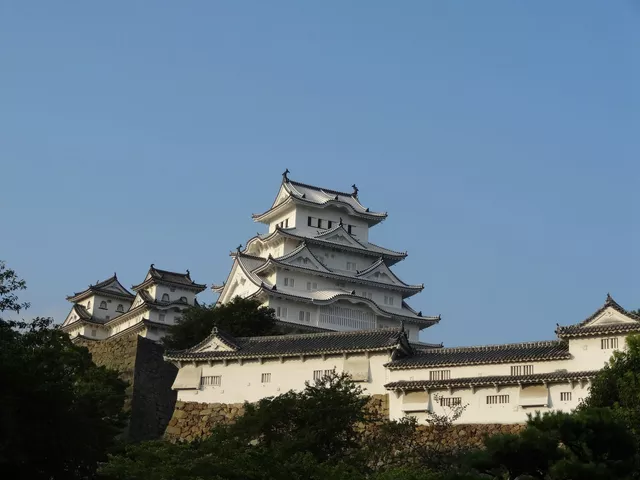
Methods of Social Control in Japan, Early Tokugawa Period (1603 - 1867)
How to overcome challenges of post-militaristic society
HistoricalThe philosophy of merit acquisition through labour
Annotation
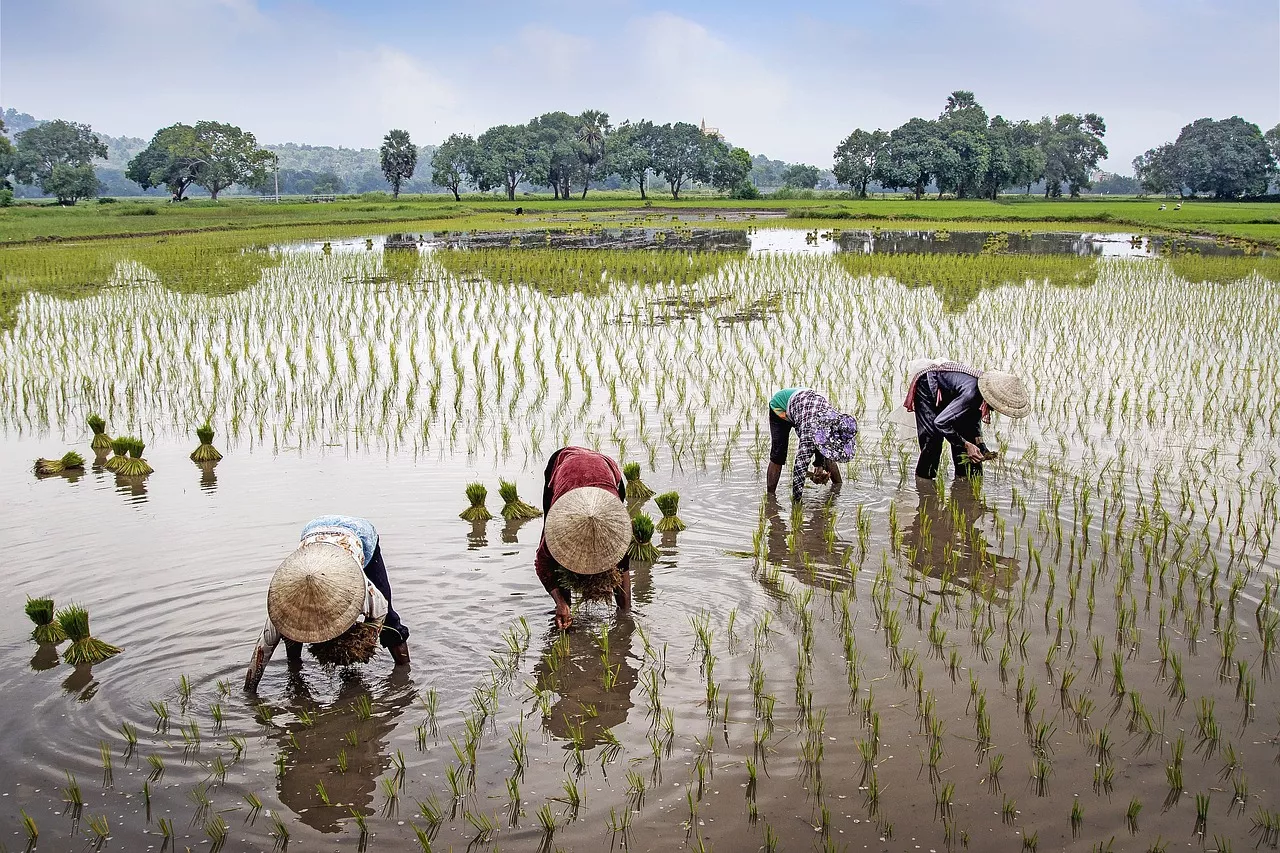
Chan Buddhism as a direction originates in the period of the seventh - tenth centuries during the Tang Dynasty among itinerant monks seeking to gain self-sufficiency through agricultural labor.
Chan monks live far from the capital, they are itinerant meditation masters. They enjoy support and recognition in peasant societies. At the same time, there is also a monastic court elite who justify their position by cultivating “spiritual fields of blessing and merit” through prayer and meditation, which is perceived by the people as parasitism. By the eighth and ninth centuries, Chan monks form permanent communities in which both students and teachers engage in hard physical labor for the benefit of the entire village.
In the Huichang era around 845, the persecution and eradication of the elite of Buddhist monasticism begins, which does not affect the farmer Chan. Through the practice of physical labor, the practice of Chan is considered a virtuous institution. After the disappearance of elite monasticism in the country, a vacuum of religious practice arises, Chan spreads widely and even experiences the collapse of the Tang Dynasty itself.
Chan Buddhism originated during the Tang Dynasty (Tang Dynasty 618-907, Chinese 唐朝, “Tangchao”) is literally understood as “concentrated contemplation”.
The tradition is based on:
- General tradition and statutes of monastic Buddhism;
- The desire of the monks for self-sufficiency;
- The belief that spiritual merit is obtained through daily physical labor;
- Equality of labor between teachers and students;
- Separation of the “Agricultural Chan (nongchang 農 禪)” direction from the court monastic elite;
Innovation #1 - Commodification of tradition
The main difference between the practice of Chan and the practices of court monasticism lies in the revision of the fundamental ethical logic of the Buddhist tradition. The acquisition of karmic merit through spiritual practices in relation to specific people has been replaced by the acquisition of merit through physical labor and real harvests. The new Chan Mythology broke the traditional logic of exchange: Metaphysical "merit fields" (futian 福田) are replaced with real labor and real crops.
Since the tenth century, the patriarch Baizhang Huaihai is considered the founder of the organized direction of Chan practice.
The legendary Baizhang Huaihai serves as a model of an exemplary monk who does not look for easy ways, and shows by his own example how the new Chan ethics should be implemented. Baizhang participates in the daily labor activities of his community, striving to be the first to take up the hoe and go out into the field.
The legend describes such a case:
When the senior monks decided to hide the tools so that the patriarch would not exhaust himself with hard work, Baizhang, not finding them, refused food that day. The famous phrase "a day without work is a day without food" is attributed to him.
This story becomes part of the complex of legends accompanying the development of the Chan tradition. The first complete description of the new form of monasticism founded by Baizhang appears in the Song Biographies of Eminent Monks in 988, 174 years after his death.
The Chan master Baizhang Huaihai 百丈懷海 (720–814) was revered as the founder of Chan monasticism beginning in the tenth century. ... The records of the Hall of the Patriarchs (Zutang ji), dated 952, describe Master Baizhang's actions:
- He lived his life in zealous honesty and high morality;
- Every day when [the community] took up [agricultural implements] for [manual] labor, he was always first in line;
- established a unique, Chan-specific, form of monasticism consistent with the general codes of Buddhism;
- founded monastic institutions of a new type;
- set up a system which required that the higher and lower monks manifest the same level diligence on the fields.
Innovation #2 - Institutional separation
During the Song Dynasty, starting from the 10th century, Chan monasteries became distinguished from other public monasteries primarily by the preservation of the hereditary line of teachers who were assigned places in their administration. In these monasteries, instead of traditional images of the Buddha, images of past teachers revered as Buddha were installed.
The Chan monasteries of the Song Dynasty (Song Empire 960–1279, Chinese 宋朝, Song chao) were distinguished by:
| Chan monasteries were not considered sectarian because:
|
The acquisition of such a status by Chan masters is not based on sectarianism or deification of the individual, but on the observance of the fundamental subtleties of the rituals of Buddhist practice.
Masters, inheriting the line of patriarchs, preaching and doing their work, acquire “Buddhahood”, and this state, and not a person, is revered by the rest of the monks. This is an important feature of this culture.
“The reason why we do not build a Buddha hall, but only build a dharma hall [in which the abbot preaches], is to show [the fact] that the buddhas and patriarchs (or Buddhist patriarchs) personally entrusted [chan transmission to the abbot, k who] should be treated as the most revered in place [of the Buddha]."
Tang Baizhang Huaihai 百丈懷海 (720–814).
Innovation #3 - Fusion of cultural contradictions
Before the advent of Chan, Buddhism in China maintained a balance between sacred and secular economics. Traditionally, lay people make donations to the sangha, and monks, through meditation and psalm reading, turn these donations into the so-called “merit fields”. It is believed that the donor in this way receives a greater “spiritual profit”.
Traditional Buddhists insist on the dignity of the Chinese people's support for this practice, arguing that the sangha makes an undeniable contribution to society.
The postulate “a day without work is a day without food” breaks the pattern of these relationships. Chan of the 10th and 11th centuries insists that monks must be able to combine religious practice with physical work. They should strive for freedom from donations.
The writer and government official Zhang Shanying, in his “Treatise in Defense of the Dharma”, recorded this contradiction in asserting the special status of Buddhist monasticism and the principle of complementarity, and not the obligatory participation of monks in agricultural work.
Zhang Shanying 張的英 (1043–1122) fixed the dissension at the very heart of "Chan agriculture" through the following postulates:
- Buddhist monasticism is a special-dedicated profession;
- the participation of monks in agricultural work is superfluous for their basic religious duties;
Chan Buddhists have never been truly materially self-sufficient, they have always relied for their daily existence on the donations and productive labor of the tenant farmers working on the monastic land.
The successors of the Chan tradition during the Song Dynasty developed different ways of stylizing the life of the masters of the past as a rural one, adding up the main components of the Chan identity that are familiar today.
This adaptation and legends give special authority to the patriarchs, through the identification of the Chan tradition with the aesthetics of rustic simplicity. Rural adaptation includes recording the monk in the dynastic line, reworking the history of life, which in particular deals with hard physical labor, positioning the monastic order and its members as followers of the exemplary practices of the ascetic “mountain” Chan tradition.
It is important to note that all these transformations are done to bring the values of tradition closer to the values of the elite and intelligentsia of their time.
Rustic stylization of the Chan tradition:
Fu Xi (Chinese 傅⼤大⼠士 497–569)
- Included in the lineage of the dynasty of masters retroactively;
- Considered an early example of the Chan tradition;
- Changed aspects of life from seclusion in the mountains to farming;
Da Jian Hui Neng (traditional Chinese 大鑒惠能, 638-713)
- Attribution of the hard work of grinding rice;
- Considered an early patriarch of the Chan line;
- In the description of life, temporal inconsistencies are found; the text was rewritten in the periods from the 8th to the 13th centuries;
Monks of the Song Dynasty (960–1279)
- Positioned themselves as "mountain monks" using the first person pronoun shansen (⼭山僧);
- Established this name in all possible records of sermons and dialogues;
- Approved the identity of the “simple, intuitive genius of the masters”, which echoed the ideals of government officials and contemporary writers;
Conclusion
In a modern interpretation, the Chan tradition becomes a useful tool in the development of the Chinese Communist Party. Peasant communities, traditionally using the structure of working groups, turned out to be malleable to the structure of cooperatives.
The concept of a “model Chan citizen” emerged, who is ready to perform practical work without the goal of material reward. Some monks have chosen the so-called “Bodhisattva path” to promote the teachings of Chan Buddhism in society - they abandon asceticism and move into worldly life, preserving the tradition of self-sacrifice through self-discipline and work for the common good.
The Chan monks built into the new paradigm of Chinese communist ideology by identifying their work with the accumulation of merit, and the policy of increasing productivity as an opportunity to realize these merits with even greater strength.
"Buddhist merit"
“The introduction of Chan Buddhism into the reformation of the Sangha convinced the monks that practical work was a greater expression of the Buddha's way, and that the Communist Party was not an oppressor... The transition to productivity was not an instrument of political pressure on religion, it was a Buddhist-created branch of religious thought, which ensured the accumulation of good merit.”
Tymick, Kenneth J., Chan in Communist China: Justifying Buddhism's Turn to Practical Labor Under the Chinese Communist Party (Article) - Constructing the Past: Vol. 15 : Iss. 1, Article 9. pp. 45-46, WEB 2021
Chan's social innovation is to redefine the traditional relationship between religion and society. It is expressed in the transformation of the spiritual practice of accumulating karmic merit into real physical labor.
This innovation sets off a cascade of cultural change and also allows the values of Ch'an to endure to this day.
It is important to note that many of the innovations that gave impetus to the rapid development of China, and in particular the concepts of working groups and social credit, contain elements of the principles of the farmer's Chan.
Social innovations of the Chan tradition of the 7th - 11th centuries
- Separation of labor from metaphysical practice;
- Establishment of equality of participants in labor relations;
- Establishing the principles of meritocracy in work;
- Replacing the practice of honoring the image of the Buddha with the practice of honoring the image of the patriarch;
- Rapprochement of the principles of the Chan tradition with the values of contemporaries;
Before the advent of Chan practice
- Worshiping the image of the Buddha;
- Court Buddhism is the guardian of tradition;
- Obtaining spiritual merit through donations and ritual practices;
- The teacher has privileges;
- Physical labor is not seen as an element of spiritual practice;
After the advent of the Chan school
- Worshiping the image of the Patriarchs;
- Farm Buddhism is the guardian of tradition;
- Obtaining spiritual merit through productive work;
- The teacher has no privileges;
- Physical labor becomes an additional factor in spiritual practice;
Sources:
Buckelew, Kevin, “Inventing Chinese Buddhas: Identity, Authority, and Liberation in Song-Dynasty Chan Buddhism” - Columbia University, 2018, WEB 2021
Buckelew, Kevin. “Buddhist Pastoral: "Farming Chan" as Aesthetic, Work Ethic, and Identity in Middle-Period China.” (2017). WEB 2021
Tymick, Kenneth J., “Chan in Communist China: Justifying Buddhism's Turn to Practical Labor Under the Chinese Communist Party” (Article) - Constructing the Past: Vol. 15 : Iss. 1, Article 9. pp. 45-46, WEB 2021
Welter, Albert, “Monks, Rulers, and Literati: The Political Ascendancy of Chan Buddhism” 2006 WEB 2021
Hershock, Peter, "Chan Buddhism", The Stanford Encyclopedia of Philosophy (Spring 2019 Edition) WEB 2021
Thompson, John M., “Huineng (Hui-neng) (638—713)” (Article): Christopher Newport University U.S.A. WEB 2021
“Dajian Huineng – The "Official" Sixth Patriarch of Ch'an” - Michigan Shaolin Wugong Temple, WEB 2021
How to overcome challenges of post-militaristic society
Historical
Alternative paradigm of resource management
Historical
Brief history of atheist thought in Europe, XII century c.e.
Historical