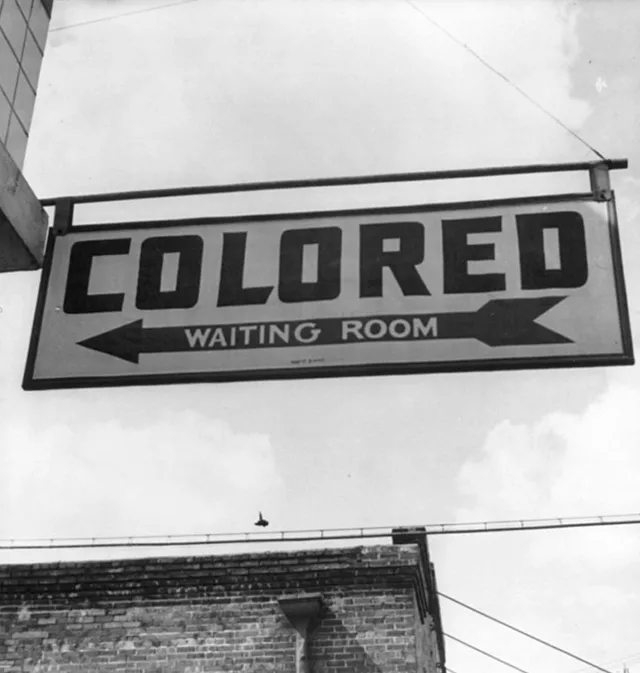
Racial Segregation as a Cause of Systematic Economic Disadvantage
How segregation causes poverty
Knowledge BaseThe "ghetto phenomenon" and its roots.

The early post-World War II period witnessed the second wave of migration of blacks from the rural South to the North. The number of migrants in the 1950s and 1960s was even greater than the number after World War I; between 1940 and 1970, the growth of the black population was 4.7 percent annually in Northeastern and Midwestern cities and 4 percent annually in the South and West (Table 2).
The result was another large increase in segregation. Between 1940 and 1970, dissimilarity increased by 5 percent and isolation increased by 4 percent in the All City sample and 15 percent in the Matched Sample. As Figures 3 and 4 show, the increase in segregation is particularly great of the large industrial cities in the Northeast and Midwest. Large Southern cities also saw a dramatic increase in segregation in this period.
A regression of changes in segregation between 1940 and 1970 (N=102), similar to the regression shown above for the earlier period, confirms the importance of continued migration in the expansion of the ghetto:
For both dissimilarity and isolation, increases in black population are associated with increases in segregation. Indeed, the coefficients are about the same magnitude as in the earlier period. There is again no effect of increases in the non-black population on segregation.
The dramatic clustering of blacks into tracts that were exclusively or nearly exclusively black is particularly striking in this period. Table 3 shows the distribution of census tracts in 1940 and 1960 by the percent of the tract that is black. For example, 21 percent of census tracts in 1940 had no blacks and 39 percent were between zero and one percent black. Between 1940 and 1960, the most remarkable change in racial distribution is the shift from tracts that were moderately black to tracts that were heavily black. The share of central city tracts that were less than 15 percent black fell, while the share of tracts that were 15 to 90 percent black increased by 4.4 percentage points and the share of tracts that were 90 percent or more black nearly doubled. Some of this increased concentration of blacks was a result of crowded cities, coupled with increased racial tension, that propelled whites to leave cities for suburbs (Massey and Denton, 1988a). As Table 3 shows, suburbs were much more likely to be exclusively or nearly exclusively white than were central cities.
By 1970, segregation in America had reached staggering levels. To achieve racial integration in the average city, almost 80 percent of the black population would have had to move to a different census tract, and the average black lived in a census tract that was 68 percent black. Isolation of blacks from whites was 41 percent. Using our measure of whether the city had a ghetto, 127 of 211 cities qualified.
How segregation causes poverty
Knowledge Base