How did Amsterdam become the cycling capital of the world?
Grass-root activism that changed the way of life
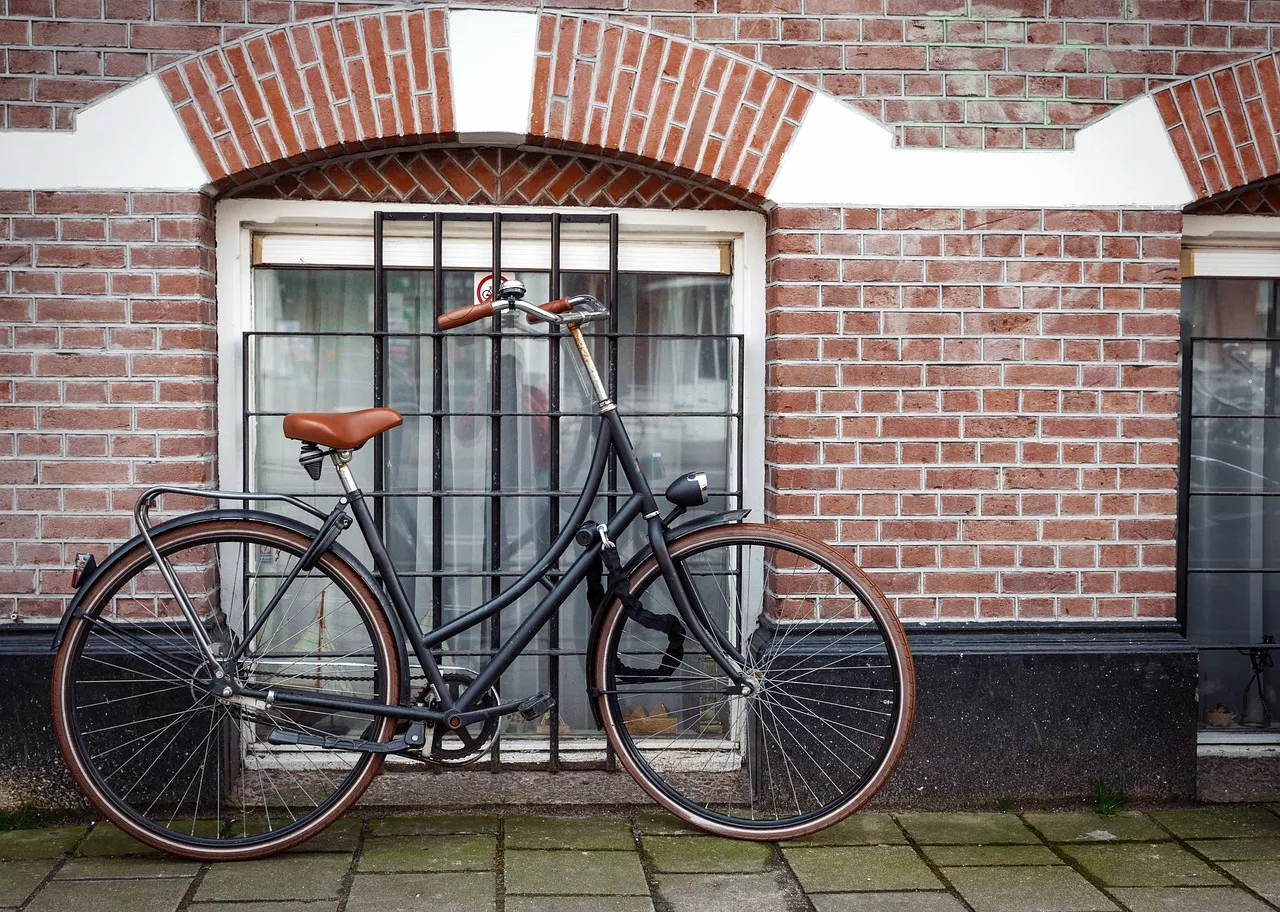
The bicycle is one of the easy recognized symbols of Amsterdam. However, not everyone knows that behind urban improvement and high-quality infrastructure lies substantial effort of the “down-to-earth” grass-root activism.
When rebuilding the country after World War II, the Dutch government was able to significantly improve the economic situation of its citizens. Between 1957 and 1975, the middle class was able to afford more and more luxury goods, including cars. Sharply increased amount of road vehicle put pressure on the infrastructure of old cities: historical buildings were partially demolished, bicycle paths were removed to expand existing roads, parks and green squares were turned into parking lots.
The citizens generally was unsatisfied with such «improvements», and the peak of their discontent came in 1971, when the number of victims of the road accidents exceeded 3,000 people. Approximately 400 of them are children under 14 years of age.
The population reacted with spontaneous protests “for safe streets.” One of the most massive action took place under the slogan “Stop the killing of children!” / "Stop de Kindermoord".
Thus, citizens called on the government to restrain the expansion of car infrastructure and turn its attention to the injured child cyclists.

The national public campaign began with the documentary film “On behalf of the children of Pijp” by Dutch director Roeland Kerbosch, released in 1972. The director spoke about the activism of children in the De Pijp district, one of the oldest and most densely populated areas of Amsterdam. Children and their parents, who still remembered how they themselves played freely in the streets, expressed their dissatisfaction with the lack of playgrounds and green spaces and, above all, with the rapidly increasing number of deaths of children under the wheels of the cars.
Activists blocked streets, changed speed limit signs, organized regular meetings, and put forward demands to the local administration.
Regional newspapers picked up the topic, and news of the events in De Pijp spread throughout the country.

In Netherlands at that time there were already politically engaged organizations that took part in similar protests throughout the country. They linked road safety issues and environmental degradation to the influence of the economic and political system. This, in turn, led to the strengthening of local self-government organizations.
EXAMPLE: «As in other countries, protest movements emerged in the Netherlands in the late 1960s against the negative impact of capitalism on the environment and traffic. The Provo Movement (1965-1967) and the Kabouter (Gnome) Movement (circa 1970) were among the first organizations to participate in these protests. The Kabouter movement opposed the large spaces reserved for cars and the resulting air pollution. Provo activists were the first to draw attention to traffic and safety problems in the Netherlands. Their White Plan for the Bike, considered the first bike-sharing scheme, talked about the car's role in polluting the environment.
The important values that Provo, Kabouter, and similar movements represented were the same as for later activism groups of the 1970s: an emphasis on self-government, livability, a small (neighborhood) scale that favors walking and biking over car; opposition to unfettered economic growth and the redevelopment of the city center to accommodate large businesses and automobiles.»
Source: Mobility protests in the Netherlands of the 1970s: Activism, innovation, and transitions.
The diversity of social movements in the Netherlands and the specification of their goals have created many points of pressure on the authorities. The government was forced to listen to the demands of citizens. A reinforcing factor was that these movements did not formulate a political agenda and did not raise the issue of distrust in the government. They were interested in a technical approach to solving problems, which was based on specific infrastructure proposals from citizens. These suggestions included:
- improving the quality of transit;
- reducing traffic speeds in residential areas;
- creating safe streets for cyclists only;
- construction of parks and playgrounds instead of parking lots;
- streets with permanent car ban;
- energy saving.

EXAMPLE: «In 1960, in the Netherlands there were 45 cars per 1,000 inhabitants, which is half as much as in Belgium - 82, and Switzerland - 89. However, by 1970, the number of car owners in the Netherlands reached the same level as in these countries in same period: about 200 cars per 1,000 inhabitants.
The rise in car ownership in the country is partly due to the relatively late abandonment of post-war wage control policies. This occurred in the early 1960s and led to a sharp increase in the purchasing power of many households. [...] Moreover, this growth coincided with a broad cultural movement and more frequent calls for democratization and active citizen participation in local government.
As Geels argues, these social movements shaped the landscape that influenced the development of the Dutch transport system around 1970, and this “led to institutional changes in decision-making procedures, giving citizens and community groups more legal power.”»
Source: Mobility protests in the Netherlands of the 1970s: Activism, innovation, and transitions.
The turning point came in 1973 with the global oil crisis. The price of oil, as a result of the embargo of the OAPEC member countries, as well as Egypt and Syria, rose from 3 to 12 dollars per barrel. The Dutch government was compelled to adopt a transport policies aimed at promoting the bicycle, a means of transportation that does not require petroleum products for refueling,as well as to promote a package of measures to eliminate the daily use of cars within the city.
Civic activism played a key role in the formation and implementation of new rules that made government timely respond to protests by beginning to construct cycling infrastructure at the expense of automobile infrastructure.
Bicycle lines and bicycle parking were built separate from the main roads - this alone led to an increase in cycling in some cities by 75%. Mortality associated with road traffic accidents decreased to 2% (2013 data). The ecology of cities has improved significantly and noise levels have decreased.
EXAMPLE: «Connected across Dutch cities and linked by a common legal and planning policy framework, we show that the urban-based protesters worked with government actors to advance three cycling-supportive innovations: (i) the woonerf, a low-speed traffic environment discouraging through-traffic and eliminating distinctions between pedestrian and car space; (ii) car-restricted central business centers designed to limit car access while prioritizing pedestrians and cyclists; and (iii) the bottleneck-memoranda, a tool that relied on community participation in reporting obstacles to cycling. We argue that activism and protest provided critical support to development and implementation of these innovations. We also claim that these innovations helped stabilize cycling rates by making cycling more convenient than driving and integrating consideration for cycling into local and national transport policies.»
Source: Mobility protests in the Netherlands of the 1970s: Activism, innovation, and transitions.
Policy packages that authorities arrived to in order to turn Amsterdam to a «Bicycle city», can be summarized as five key decisions:
- Introduction of gradual measures to abandon the car.
- Creation of separate bicycle lanes instead of additional lanes on highways.
- Inclusion of all city roads into one bicycle network.
- Reducing the speed of vehicles in residential areas to 30 km/h.
- Construction of underground parking lots for cars.
Along the way errors were made, that we also represent as five main points:
- The government has not taken into account the dramatic increase in the number of bicycles on the roads.
- Lack of pre-built bicycle parking (especially for family bicycles);
- Increased risks associated with an increase in the flow of cyclists.
- Delayed response to the risks associated with using cell phones while driving.
- No plan for recycling old bicycles.
EXAMPLE: "BICYCLES IN AMSTERDAM: NOT ALL SO GOOD Over the past 25 years, the number of cycling trips per day has increased from 445,000 to 665,000.
As more and more people share roads (in many cases narrow), safety becomes an issue. While most cyclists obey traffic rules, others do not. In fact, there are a lot of idiots who run red lights, drive on sidewalks, and/or pay more attention to their phone than to the road.
Speaking of tourists... Amsterdammers have learned to be especially careful when they see people on rented bicycles. Almost always these are visitors to the city who, with minimal understanding of traffic rules and safety concerns, have decided to test their cycling skills on the busy roads of Amsterdam while trying to pay attention to the sights. [...]
BICYCLE PARKING PROBLEMS IN AMSTERDAM As you can imagine, the overabundance of bicycles creates an ever-increasing parking problem - especially in the city center. Sometimes some sidewalks are almost impossible to walk on due to the countless number of haphazardly parked bicycles. The city spends a lot of time and money removing illegally parked bicycles."
Source: Amsterdam: City of Bikes.
Conclusions
Amsterdam became the so-called “bicycle capital” under the influence of many factors, and one of them is that the Netherlands already had a cycling subculture and a tradition of social priorities.
“Free City” has attracted attention not so much by becoming the center of the “Stop Killing Children!” campaign, but by constantly improving cycling infrastructure.
These initiatives have created a perception (including among the Danes) that the city for cyclists is an integral part of the culture, and not a temporary innovation, that develop a new lifestyle.
Activism in promoting cycling is declining today, and this is explained by the significant achievements of social movements in this area: citizens feel safe enough on the roads, so they not too active on this issue.
However, anti-car protests in the Netherlands continue to develop and take on new forms. For example, the curb-by-curb initiative, part of the Take Back the Streets movement, proposes displacing the car by creating additional social spaces through parking lots, continuing the tradition of building pressure on municipalities to build more underground parking.
Every year, more spaces converted to cycling and walking, public transport phasing out need for private vehicles. This turns Dutch cities in safe and pleasant places to be, example that can and should be adopted all around the world.

Sources:
https://www.theguardian.com/cities/2015/may/05/amsterdam-bicycle-capital-world-transport-cycling-kindermoord
http://www.dutchamsterdam.nl/68-amsterdam-city-of-bikes
https://www.iamsterdam.com/en/plan-your-trip/getting-around/cycling/amsterdam-cycling-history
https://www.citylab.com/transportation/2017/10/5-reasons-why-amsterdam-works-so-well-for-bikes/544101/
https://www.dawn.com/news/1423593
https://theculturetrip.com/europe/the-netherlands/articles/the-prettiest-places-to-cycle-in-amsterdam/
https://theculturetrip.com/europe/the-netherlands/articles/why-is-amsterdam-the-worlds-cycling-capital/
https://biketoeverything.com/2018/12/18/bicycle-infrastructure-in-amsterdam-and-the-netherlands/
https://thetyee.ca/Culture/2019/05/06/Cycling-Vancouver-Vs-Amsterdam/
https://www.smartcitiesdive.com/ex/sustainablecitiescollective/city-too-many-bicycles-amsterdam-s-unique-problem/26257/
https://www.telegraph.co.uk/news/2016/07/04/holland-struggles-with-the-problem-of-the-ever-expanding-dutch-b/
https://www.bikelaw.com/2019/05/amsterdam-not-cycling-paradise/
http://www.aviewfromthecyclepath.com/2011/01/stop-child-murder.html
http://www.aviewfromthecyclepath.com/2011/10/how-dutch-got-their-cycling.html
https://www.pps.org/article/how-the-dutch-got-their-cycle-paths
https://www.iamexpat.nl/expat-info/dutch-expat-news/fines-mobile-using-cyclists-soon-come-force-netherlands
https://www.beejonson.com/single-post/2018/04/27/Are-Cycling-Tourists-Becoming-A-Problem-in-Amsterdam
https://www.expatica.com/nl/living/transportation/driving-in-amsterdam-102758/